In the space of a week, I attended 3 events that left me with mixed emotions about the future of heath care.
Sustainable healthcare delivery in practice: what drives real impact
read more
The post Fern Bolwell’s reflections on the Sussex Health Equity Fellowship appeared first on Here.
]]>
Our work at Here focusses on bringing together service improvement, lived experience and data.
Last June we joined the Sussex Health Equity Fellowship, a brand new programme created by Sussex Health and Care and partnered with Kent Surrey Sussex Academic Health Science Network.
We were extremely keen to be involved and were thrilled that of the eight places offered two of our team were accepted onto the programme.
Fern Bolwell, Learning Lead and Tom Golden, Business Intelligence Analyst at Here both took part in the programme. We felt that having people from both an operational and data and a analytics perspective would of huge benefit due to how equity learning could be used by these different skills areas.
In this blog, Fern shares her more about the Fellowship and reflects on what both she personally and us as an organisation have learned from the experience.


The Health Equity Fellowship is a nine-month programme delivered by NHS Sussex and Health Innovation Kent Surrey Sussex. The programme aims to equip participants with the skills and knowledge to become key change agents within their organisations, promoting a focus on equity and reducing health inequalities.
The Fellowship is delivered through a mixture of lectures, webinars, action learning sets, mentoring and connection to each other’s knowledge and experience. Alongside this, Fellows complete a work-based project with a goal of improving health equity.
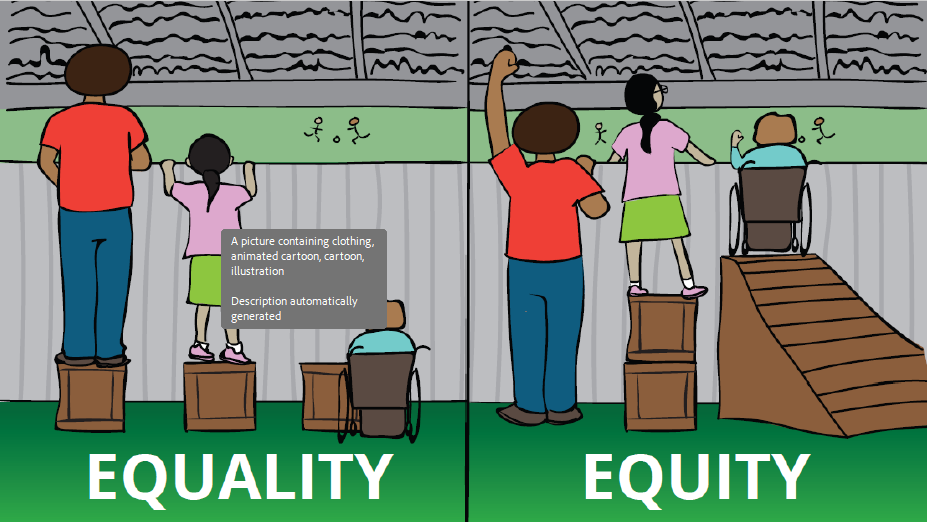
‘We know that our society is not fair and equitable, and many people face
systematised and institutional discrimination and cannot thrive in the conditions in which they live. We recognise the structural and cultural inequalities that are embedded in our wider society, and that this impacts our work in health and care. We recognise the inequities in the healthcare system and we want to work to address those.’
I have always been passionate about justice and fairness in society and ensuring everyone’s voices are heard and acted on. My professional goal is to realise this mission through the work that I am doing with Sussex MSK Partnership and ensure that health equity is always considered in each decision for the patients who need it most.
For me the opportunity to be a part of the Fellowship came at a key moment of change for the Sussex MSK Partnership as we looked to the future and worked on how to deliver healthcare differently.
Sussex MSK Partnership had already set aside dedicated project groups to focus on health equity. This work has been divided into 3 workstreams – Data, Staff Support and Community.
I work across each project group and was able to see where each intersected and supported the other. We first focused on an evidence-based approach through both community outreach and data gathering to ensure the changes we make, make a difference where it is most needed.
The way we work at Here meant we were able to be agile and encouraged to be innovative and forward thinking in approaches to delivering healthcare.
The Health Equity Fellowship gave me the opportunity to grow my capability in population health, innovation and evaluation. My understanding increased in applying an equity lens to change initiatives. As well as expanding my network and connecting me to experts in a wide range of relevant areas.
Following the fellowship, I presented at Sussex Partnership Foundation Trust and Sussex Medical School’s Anti Racism event to showcase our work at Sussex MSK Partnership.
I felt truly inspired by the dedication of the team leading the Fellowship and emboldened by their hope, even when honestly discussing the real challenge and shocking impact of inequity and prejudice.
During the 9 months of the Fellowship I was able to work on:
The Fellowship experience has extended my confidence, competency and language to challenge and advocate for health equity in projects, process, the workplace and the wider world.
I actively seek out to surface where there are challenges for patients and colleagues based on protected characteristics. focused on fixing, improving and most importantly sharing the learning and awareness for future prevention of inequity.
I am grateful to those who speak up and teach me. It has shifted my vision to a world where I am no longer blind to inequity.

The fellowship really opened my eyes to the impact that bias, exclusion and discrimination has on the healthcare of certain demographics.
Coming from a background of data, the fellowship taught me the importance of collaboration and co-design. I learnt that data is useful in identifying trends that might suggest inequity but it is only when you go and meet members of the community that you understand the factors that may be causing an inequity in their healthcare.
Tom Golden
Business Intelligence Analyst at Here

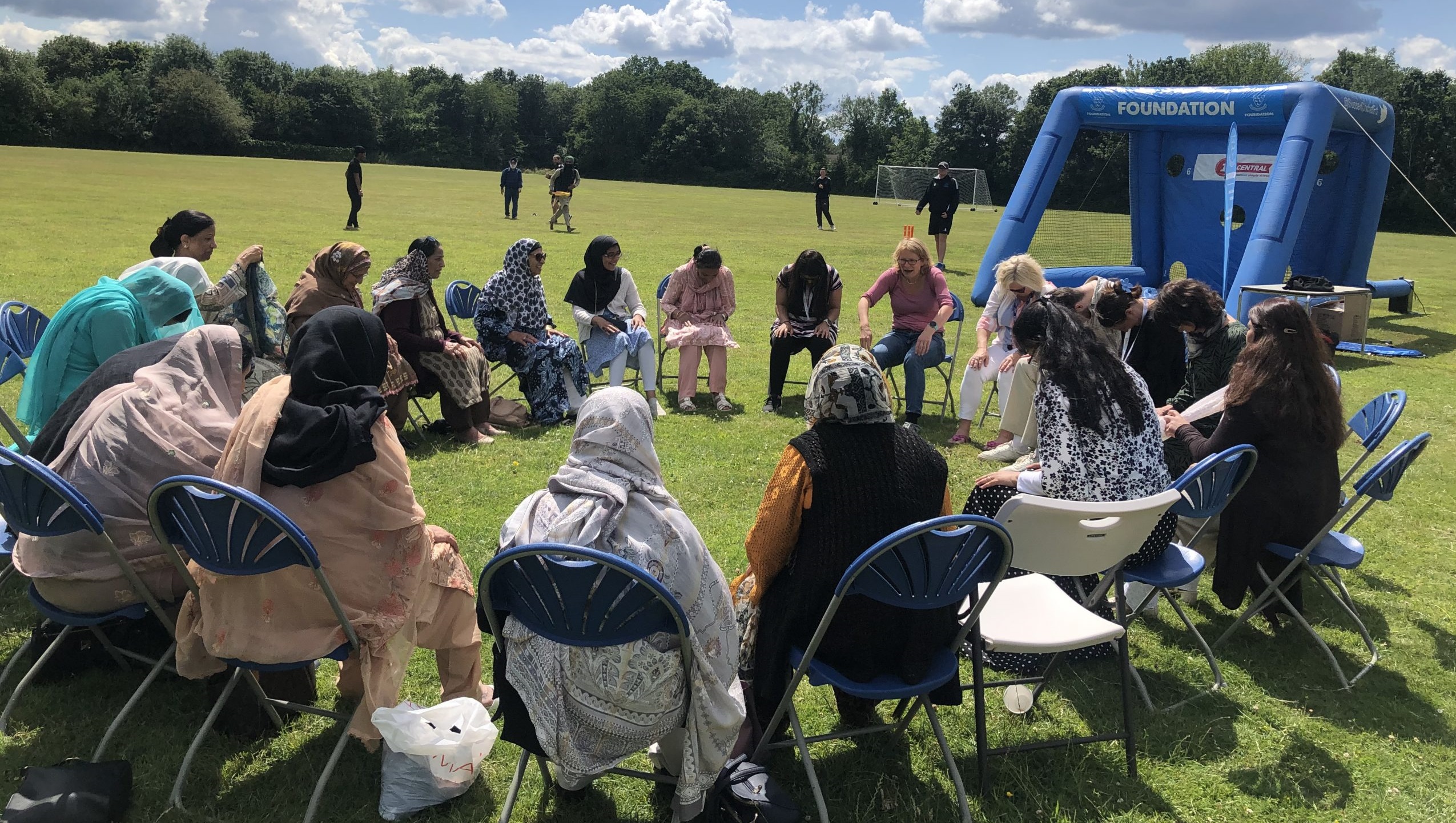
Earlier this month Sussex Health and Care Fellowship held a webinar to share more information about the programme, Fern was invited to talk and share her experience – you can watch it in full below.
The Sussex Health Equity Fellowship is now recruiting for a new cohort of Fellows – details on how to apply are below.
In the space of a week, I attended 3 events that left me with mixed emotions about the future of heath care.
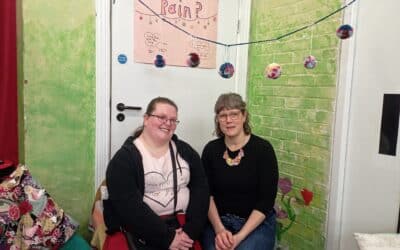
We’ve been asking communities what really matters when they’re living with pain. In this update, we share what we heard, what surprised us, and how this learning is shaping a new three-part support offer for MSK pain that starts locally, builds on existing strengths, and is designed together.
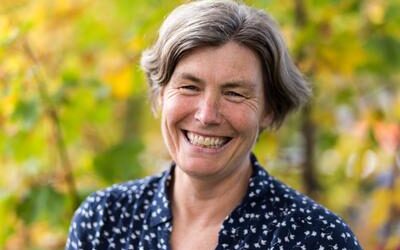
As part of Rethinking Our Health, we hosted our first community pain drop-in — a chance for people to talk things through early, get reassurance, and feel more confident about managing pain. This blog shares what we learned, and why having the right conversation at the right time really matters.
The post Fern Bolwell’s reflections on the Sussex Health Equity Fellowship appeared first on Here.
]]>The post Reflections on LGBTQ+ Inclusion: Part two appeared first on Here.
]]>
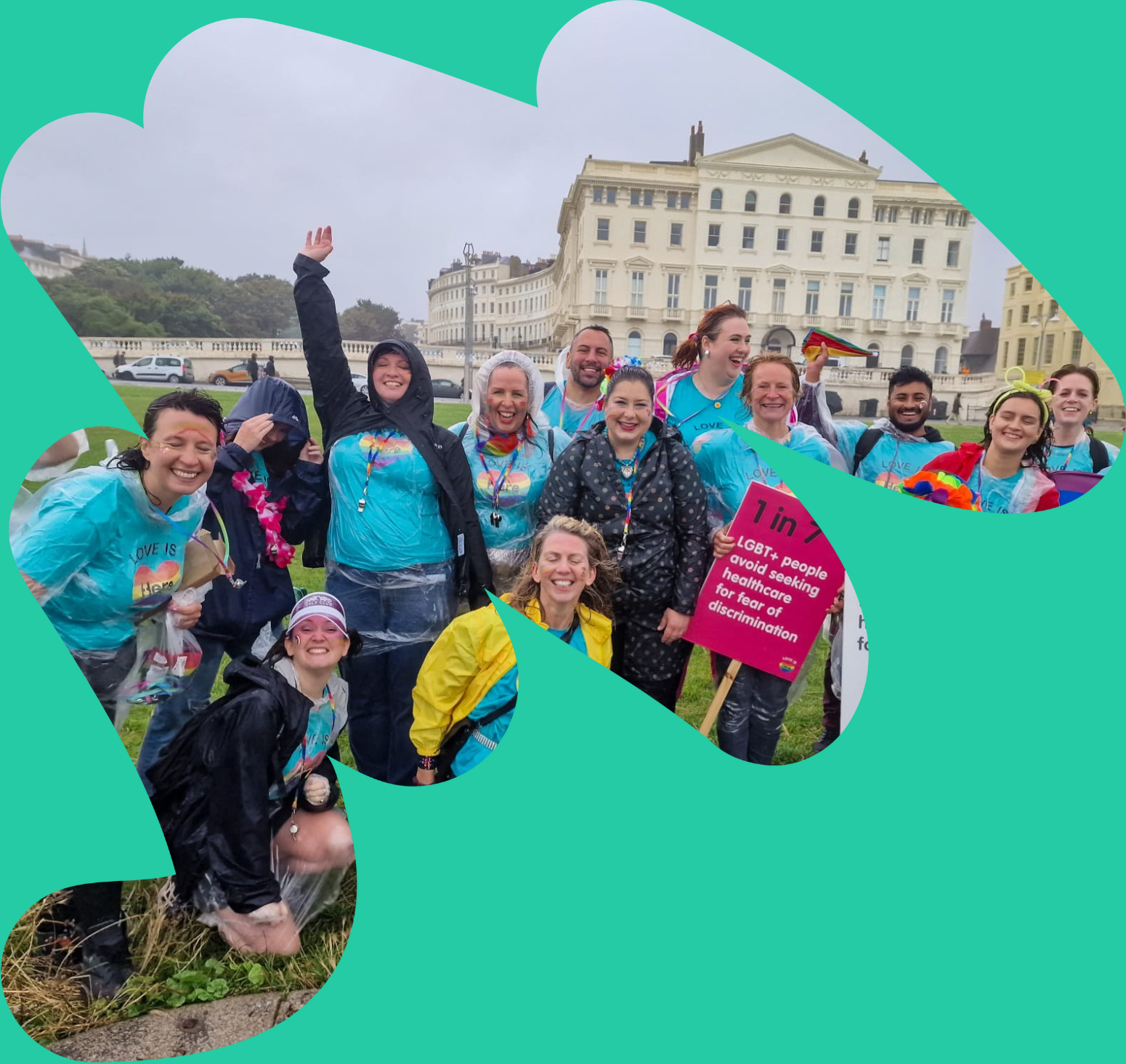
Here are two more stories from our colleagues who kindly offered to share their experience.
We were so proud and humbled to hear colleagues’ experiences and the openness and curiosity from their peers in the room. Inclusivity is fundamental to the work that we do and helps us to learn and collaborate to make better decisions with better outcomes.
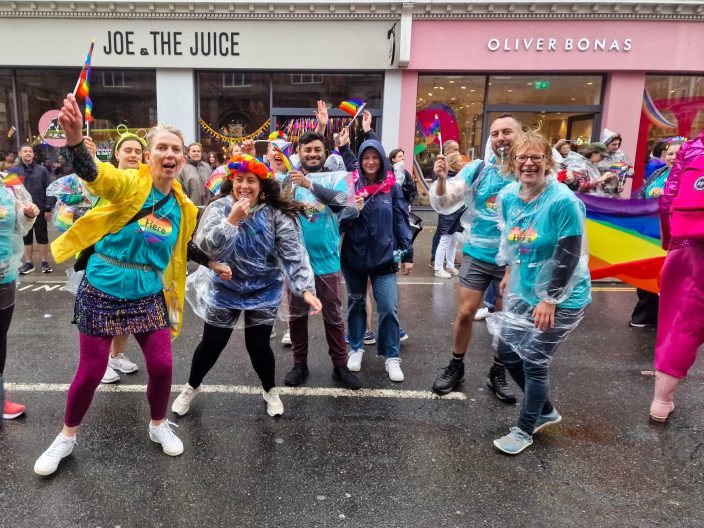
‘I recently completed LGBTQ+ awareness training. I found it way better than expected as it really made me think about my own unconscious biases towards people – from a variety of backgrounds. We all have them but it’s useful to shed a non-judgemental light on them and be more aware.
Some of the exercises really had me think about the way I have treated others and where I may not have been as understanding as I could have been.
There was also an exercise that had me really see the absolute wealth of areas of life and situations that can be impacted by being outside of society’s norms and how isolating that must make you feel. Even just the simple act of holding your partner’s hand in public! Imagine having to consider whether or not you can do that?!!’
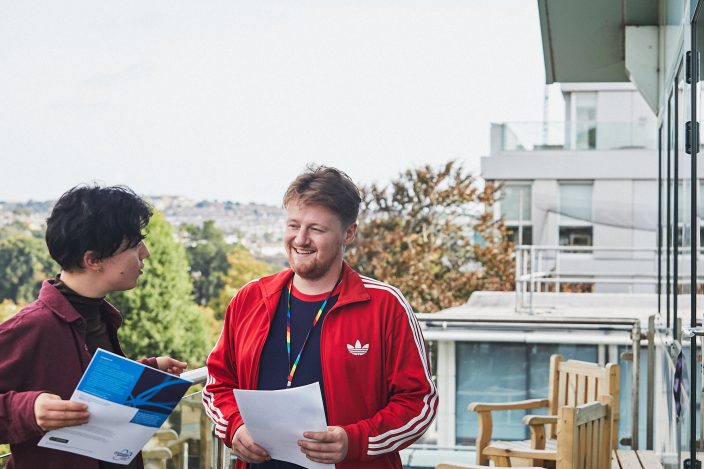
“It’s rare for me to be asked to discuss my experiences of being a lesbian, not from the perspective of being a patient or employee, anyway. And at work too! But that’s a good example of what working at Here is like.
Looking back to the 80s, 90s and 00s, I can see that a lot certainly has changed for LGBTQ+ rights – people’s perceptions of what it’s like to be a gay woman, what my lifestyle might be like, and the fact that my life is quite similar to a heterosexual person’s can still be a surprise to some.
I’ll sometimes recount stories of confused conversations I’ve had (inside and outside of a healthcare setting) around my sexuality with a light tone, because quite often, they are amusing, but there’s something about their frequency and predictability that over time changes the humour to sadness.
It would be wrong of me to say that ignorance, fear and hate of LGBTQ+ people is a rare occurrence, even in Brighton, because it’s not.
Feeling ‘other’ is common to the many LGBTQ+ people I know. Laws, TV, forms, doctor’s appointments all tell us that heteronormativity (the conscious or unconscious perception that heterosexuality is the default) is alive and well. I am required to make several mental leaps to make questions on forms fit my circumstances.
I make the decision whether to come out to work colleagues or complete strangers while making small talk in the office kitchen, as well as at blood pressure checks and a GP appointment to talk about an earache – “what contraception are you using, could you be pregnant?” Seems like a simple, if sometimes an irrelevant question to ask, but the simple answer highlights a significant part of what makes me me, and risks it being (or feeling like) a potentially uncomfortable confrontation.
When we read news reports from the UK and around the world (BBC LGBT News) where the LGBTQ+ community are experiencing mental and physical harm, sometimes death – does it still feel simple?
My upbringing and later experiences have all shaped how I think and feel about being a lesbian. Where my school sex education didn’t apply to me, I’m asked what my husband does for a living, or when the nurse calls through the curtain after disclosing my sexuality and before a smear test to ask, “but you have had sex, haven’t you?”, all mean that I still sometimes feel the need to lie or omit or avoid talking about certain subjects. And all of these things can be roadblocks to me getting the healthcare I deserve.
I won’t attempt to suggest a solution, but what I can do is describe the impact that being invited to share my experiences at work have had on me.
I can tell you about unexpectedly feeling compelled to tell my story, the anxiety and surge of emotion I felt while talking, feeling listened to and respected by the curiosity and compassion of others. The conversations I’ve since had around the office with colleagues who are brave enough to ask questions. The simple act of being asked what it’s like for me has grown my sense of pride, about who I am, who I could represent and where I work.
So maybe the answer lies somewhere in there.”
In the space of a week, I attended 3 events that left me with mixed emotions about the future of heath care.
In the space of a week, I attended 3 events that left me with mixed emotions about the future of heath care.
We’ve been asking communities what really matters when they’re living with pain. In this update, we share what we heard, what surprised us, and how this learning is shaping a new three-part support offer for MSK pain that starts locally, builds on existing strengths, and is designed together.
The post Reflections on LGBTQ+ Inclusion: Part two appeared first on Here.
]]>The post Reflections on LGBTQ+ Inclusion: Part one appeared first on Here.
]]>
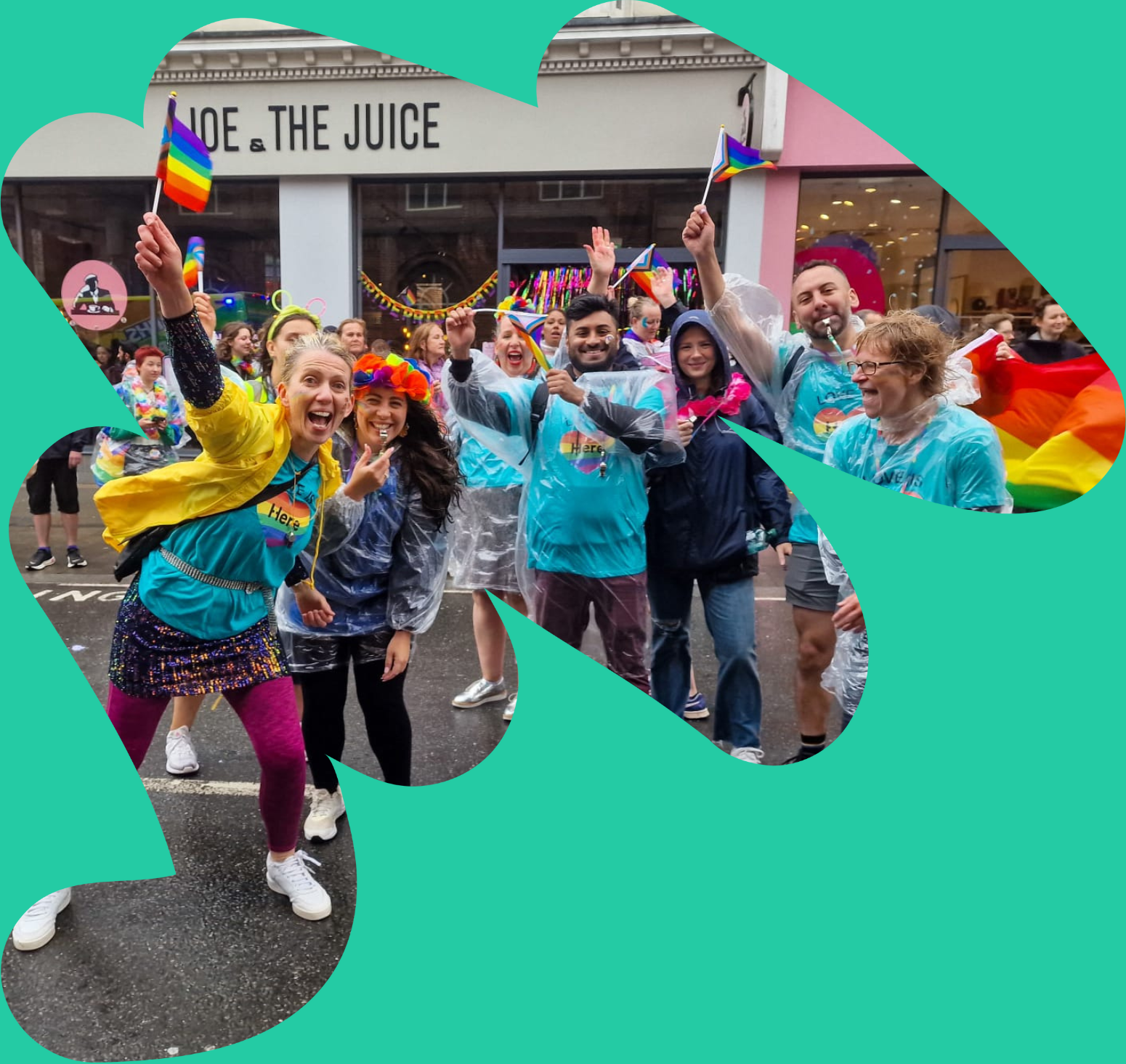
We know that LGBTQ+ people face bigger barriers when it comes to their access and experiences in healthcare and that they have poorer health outcomes.
Furthermore, Stonewall reports that over a third of LGBTQ+ people feel they need to hide who they are at work and one in five feel that being LGBTQ+ limits their job opportunities.
At Here, as part of our Everyone Culture, we have a dedicated workgroup focussed on Health Equity. By working on unearthing and addressing disparities for patients within our services, we can ensure person – centred care, tailored to their individual needs and what matters most to them. This workgroup also promotes inclusion within the workplace.
We know that to move forward we need to listen…really listen… to each other’s lived experiences to be able to make the meaningful changes necessary to ensure everyone feels included and accepted in our organisation.
To make real impact we need to create brave spaces for honest feedback and have a proactive and adaptable environment where we can respond. Our in–house training ‘Here is Learning’ is an ongoing programme which offers inspired, bite sized learning for all staff. The aim of these sessions is to discover different lived experiences broadening horizons and increasing understanding.
Recently, Here delivered a LGBTQ+ Inclusion training session for all colleagues to understand, explore and discuss LGBTQ+ experiences in both the workplace and in healthcare.
John Hammond, from Brighton and Hove LGBT Switchboard and LGBTQ Dementia Support, shared his wealth of knowledge and lived experience with the group. These sessions provided colleagues a space to reflect and share their own lived experiences and feelings around the topic.
Four of our colleagues kindly offered to share their own stories and reflections to highlight both what it’s like to work at Here and the impact of what taking part in these sessions has meant for them.
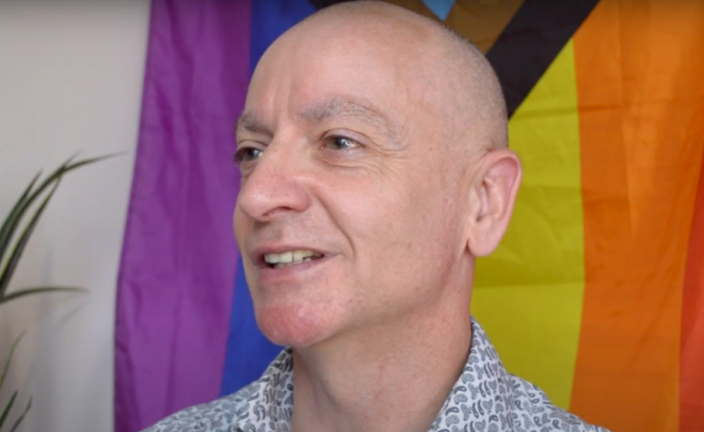
John Hammond, Brighton & Hove LGBTQ+ Switchboard
‘Recently I had the pleasure of attending a training session alongside colleagues being hosted by Switchboard. Switchboard is an amazing organisation which provides information, support and advice to people around LGBTQ+ issues.
When I first joined the organisation 10 years ago, I would not have been ready to attend a conversation like this. I can remember one of my colleagues in my first 6 months here, making some passing comment about me being queer and it sent me into a spin. It was accepting and well-meaning, but I denied it vehemently, and awkwardly and then spent months worried that everyone could tell how gay I was. I had all sorts of worries that ran rampant from that one interaction. Would people who I knew outside of work be upset? Was it that obvious that I wasn’t straight? Would it change the way my colleagues interacted with me?
One thing I often hear is that Brighton somehow exists in a bubble of total acceptance. It just isn’t true. Even with one of the largest global pride events, Brighton is not immune to all the other phobias and isms we experience in this country. One thing that I found helpful to explore in this session is the ways it takes a little extra energy to live, work and be part of systems where the default setting and expectation is different to your own identity. And no matter how well-meaning and accepting your colleagues are, we all carry our past experiences with us.
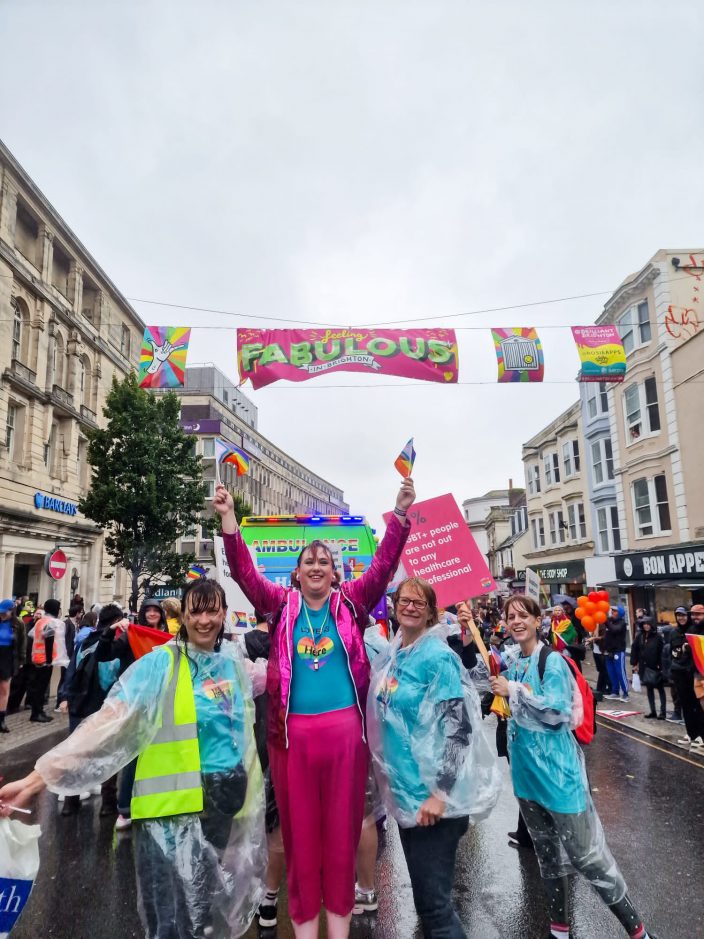
When you carry some of those queer experiences with you, you find yourself having to come out all the time. Whether it is to healthcare professionals, or colleagues or even just someone who asks you how you spent your weekend. It takes mental gymnastics to keep that stuff private, and a level of bravery to be open. And being open as a queer person doesn’t mean you have one big ‘coming out’ and it’s done.
So even though sometimes these types of Inclusivity trainings can be surprising or uncomfortable, I am truly grateful for those of my colleagues who showed up with open minds and hearts.
Having these conversations as an organisation means we are taking one step closer to making our default setting something a little braver and more open.
‘I gained a lot and valued the LGBTQ+ Here is Learning session –
As someone who belongs to the community it really made me happy to see my employer taking being a queer-friendly workplace seriously, and I really enjoyed having an expert like John Hammond from Switchboard speak to us. It also heartened me to see so many of my colleagues attending and joining in too.
Coming into the training, Here is by far the most welcoming and supportive employer to all people I have ever worked for, and I thought I was reasonably knowledgeable about my community, so I was pleasantly surprised to learn so much.
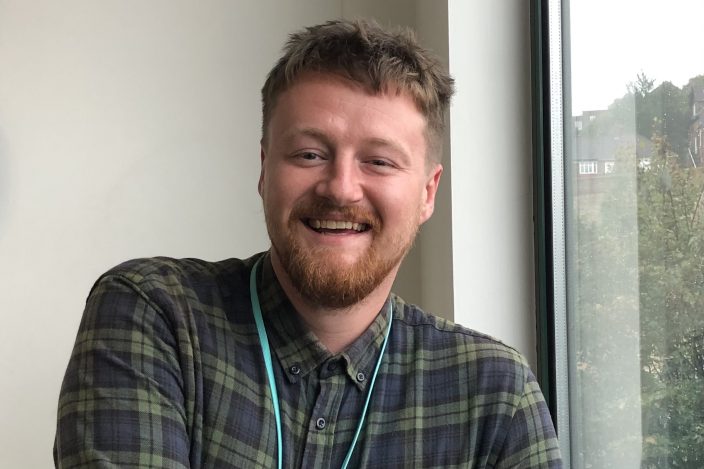
Nor did I recognise some of the struggles colleagues and patients may be facing on a daily basis and what steps can still be taken to make people feel safer at work and to help patients navigate healthcare.
I have an affection towards Switchboard personally as I used their services when I first moved down here during COVID and felt isolated. I was previously involved in the fantastic Dementia LGBTQ+ inclusive work they do with Brighton and Hove Memory Assessment Service (MAS) before I moved over to Sussex MSK Partnership Central (SMSKPC). If ever a similar scheme were to arrive in (SMSKPC) I would love to be involved.
In the meantime, thank you so much John, Switchboard and Here for making this possible.’
In the space of a week, I attended 3 events that left me with mixed emotions about the future of heath care.
In the space of a week, I attended 3 events that left me with mixed emotions about the future of heath care.
We’ve been asking communities what really matters when they’re living with pain. In this update, we share what we heard, what surprised us, and how this learning is shaping a new three-part support offer for MSK pain that starts locally, builds on existing strengths, and is designed together.
The post Reflections on LGBTQ+ Inclusion: Part one appeared first on Here.
]]>