Laura Finucane, Author at Here https://hereweare.org.uk/blog/author/laura/ Rated Outstanding by the CQC Mon, 22 Dec 2025 10:15:22 +0000 en-GB hourly 1 https://wordpress.org/?v=6.8.2 https://hereweare.org.uk/app/uploads/2024/03/cropped-Here_favicon-32x32.png Laura Finucane, Author at Here https://hereweare.org.uk/blog/author/laura/ 32 32 Early Pain Support: Insights From our first Community Drop-In https://hereweare.org.uk/blog/early-pain-support-insights-from-our-first-community-drop-in/ https://hereweare.org.uk/blog/early-pain-support-insights-from-our-first-community-drop-in/#respond Mon, 22 Dec 2025 10:14:34 +0000 https://hereweare.org.uk/?p=17631 As part of Rethinking Our Health, we hosted our first community pain drop-in — a chance for people to talk things through early, get reassurance, and feel more confident about managing pain. This blog shares what we learned, and why having the right conversation at the right time really matters.

The post Early Pain Support: Insights From our first Community Drop-In appeared first on Here.

]]>

Early Pain Support: Insights From our first Community Drop-In

Sussex MSK Health Brighton and Hove and West Sussex - NHS logo

As part of Rethinking Our Health, we hosted our first community pain drop-in,  a chance for people to talk things through early, get reassurance, and feel more confident about managing pain. Laura Finucane shares what we learned, and why having the right conversation at the right time really matters.

As part of Rethinking Our Health, we recently hosted our first pain drop-in session. It was a simple idea, but one rooted in a powerful principle: if we support people early, with the right advice and reassurance, we can help them feel confident to manage symptoms before they escalate into something more complex.  

The drop-in is designed for people experiencing acute or early pain that has been present for less than 12 weeks. It offers an informal, preventative conversation rather than a clinical appointment. This is not a clinical service, nor a replacement for existing care pathways. Instead, it operates upstream of formal services, supporting people before they feel the need to seek clinical intervention. 

By providing trusted, evidence-based advice, guidance, and signposting at an early stage, the drop-in helps people build the confidence and capability to manage symptoms themselves. Traditionally, early pain support sits within primary care, where timely access can be challenging. This approach creates space earlier in the pathway, reducing reliance on clinical services by ensuring people have the right tools at the right time. 

Strength-based conversations 

 conversations were grounded in a strength-based approach, focussing on understanding what was important to each person and working together to agree next steps. Rather than telling people what to do, we supported them to make a plan that made sense in their own lives. 

That sense of partnership is critical. It builds capability, not reliance, and reinforces the message that people are not passive recipients of care, but active participants in their own health. 

Building confidence, not dependence 

Most wanted reassurance, clarity, or guidance on what to do next. They wanted to sense-check their symptoms and understand whether what they were experiencing was “normal,” and how best to respond. 

Several people told us that had the drop-in not been available, they would have booked an appointment with their GP. After talking things through, they no longer felt they needed to. They left with practical tools, clearer understanding, and the confidence to manage things themselves. That is exactly the upstream impact we were hoping for. 

This is about prevention in its truest sense: supporting people early so they do not need to access services later because they already have what they need. 

Challenging outdated beliefs 

One of the most striking themes was how persistent some outdated messages about pain still are. Bed rest, for example, has not been recommended for acute back pain since the 1990s, yet we repeatedly heard that people believed resting completely was the “right thing” to do – and many were actively doing it. 

These conversations highlighted how valuable early, trusted advice can be. Simply correcting misconceptions and explaining why movement, pacing, and reassurance matter can make a significant difference to how someone experiences pain and recovers from it. 

Seeing the whole person 

Pain rarely exists in isolation, and the drop-in reflected that. Access to social prescribers and community workers meant that support went beyond musculoskeletal pain alone. Around a third of people attending were signposted to wider community support, recognising the social, emotional, and practical factors that influence pain and recovery. 

This broader approach makes a difference. When people feel supported in the things that matter to them – their work, caring roles, mental wellbeing, or social connection – they are better equipped to manage physical symptoms too. 

A small intervention with big potential 

This first drop-in reinforced why rethinking how and when we support people matters. By going upstream, by normalising early conversations, and by sharing trusted, evidence-based advice in a community setting, we can build confidence, reduce unnecessary demand on services, and help people feel more in control of their health. 

For me, this is what Rethinking Our Health looks like in practice: meeting people earlier, listening carefully, and ensuring they leave feeling reassured, informed, and supported. 

If you’d like more information about The Community Pain Drop-in, or Rethinking Our Heath

drop us a line at collab@hereweare.org.uk

Also of interest

Early Pain Support: Insights From our first Community Drop-In

Early Pain Support: Insights From our first Community Drop-In

As part of Rethinking Our Health, we hosted our first community pain drop-in — a chance for people to talk things through early, get reassurance, and feel more confident about managing pain. This blog shares what we learned, and why having the right conversation at the right time really matters.

read more
Rethinking Our Health: starting with pain

Rethinking Our Health: starting with pain

We’ve been asking communities what really matters when they’re living with pain. In this update, we share what we heard, what surprised us, and how this learning is shaping a new three-part support offer for MSK pain that starts locally, builds on existing strengths, and is designed together.

read more

The post Early Pain Support: Insights From our first Community Drop-In appeared first on Here.

]]>
https://hereweare.org.uk/blog/early-pain-support-insights-from-our-first-community-drop-in/feed/ 0
Tokyo… London… Birmingham: Three events, one message – It’s time to rethink healthcare https://hereweare.org.uk/blog/three-events-one-message-rethink-healthcare/ https://hereweare.org.uk/blog/three-events-one-message-rethink-healthcare/#respond Tue, 01 Jul 2025 13:47:30 +0000 https://hereweare.org.uk/?p=16699 In the space of a week, I attended 3 events that left me with mixed emotions about the future of heath care.

The post Tokyo… London… Birmingham: Three events, one message – It’s time to rethink healthcare appeared first on Here.

]]>

Tokyo… London… Birmingham: Three events, one message – It’s time to rethink healthcare

South Asian man sat talking to a care navigator in a medial consultation room

In the space of a week, I attended 3 events that left me with mixed emotions about the future of heath care.

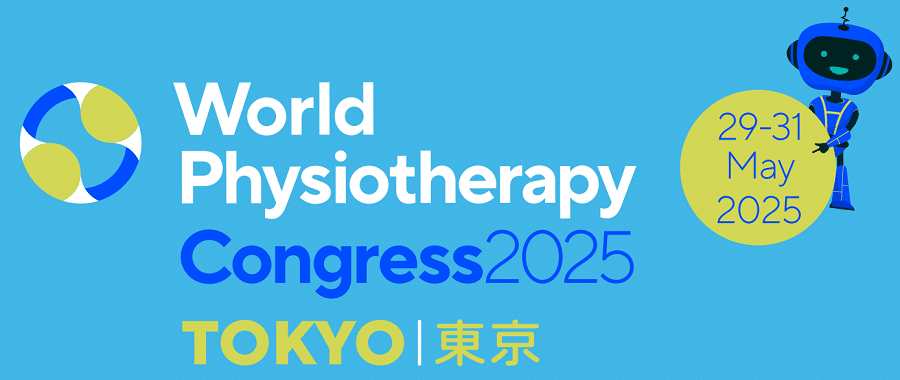
The World Physiotherapy conference in Tokyo is an event which brings together world leaders, researchers and clinicians into the same space to learn and enhance our practice, share stories and most importantly make a difference. 

I can’t help thinking we have missed an opportunity to think radically and lever our collective power and opportunity. The global burden is one that is not going away and the sustainability of healthcare is fragile.  The health burden is increasing and set to rise on a backdrop of an ageing population, and increasing prevalence of major conditions, and where we recognise the influence of the social determinants of health on people’s lives. 

There is overwhelming evidence that changing people’s health-related behaviour can have a major impact on some of the largest causes of mortality and morbidity.

Photo of two white women outside with trees in the background. stood next to each other and smiling towards the camera. The woman on the left has long hair and the woman on the right has a short bobbed hair cut.

The future of physiotherapy

In my opinion the future role of physiotherapy is one in which society needs something very different from us. The context in which we work will change, and what we do in this context matters. We will need to develop different skills, adopt new roles, work in different environments in collaboration with other professions and across our own specialities. We will need to blur the edges, let go of our identity as we know it, but create a new one that adapts, and is agile. There were glimpses of this, for example Ash James (UK) talked about the need for more generalists and Marjo Maas (Norway) on ‘Preparing Physiotherapists for the Future’, asking not only what we teach but for what world, because that world is rapidly changing.  

I saw the need to justify the professions existence and impact through economic analysis, focusing on single conditions and diseases. We absolutely add value to people’s lives, but we need to be more than just a ‘condition’ and measure our impact beyond a body part. 

Photo of two white women outside with trees in the background. stood next to each other and smiling towards the camera. The woman on the left has long hair and the woman on the right has a short bobbed hair cut.

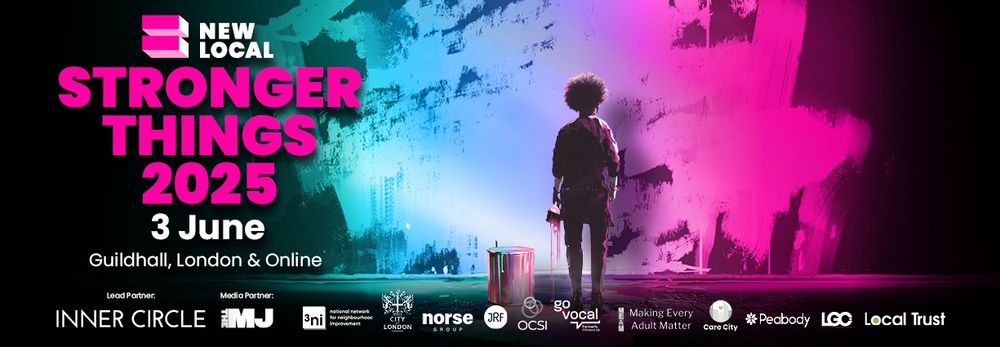
The second event was ‘Stronger Things’ an event organised by New Local an independent think tank that brings together public services with a mission to transform and unlock community power It conveyed a powerful vision in which community power needs to be built and nurtured from within. The event reaffirmed the importance of relational public services, where trust, inclusion, and empowerment are central and the future lies in partnerships with people and places. 

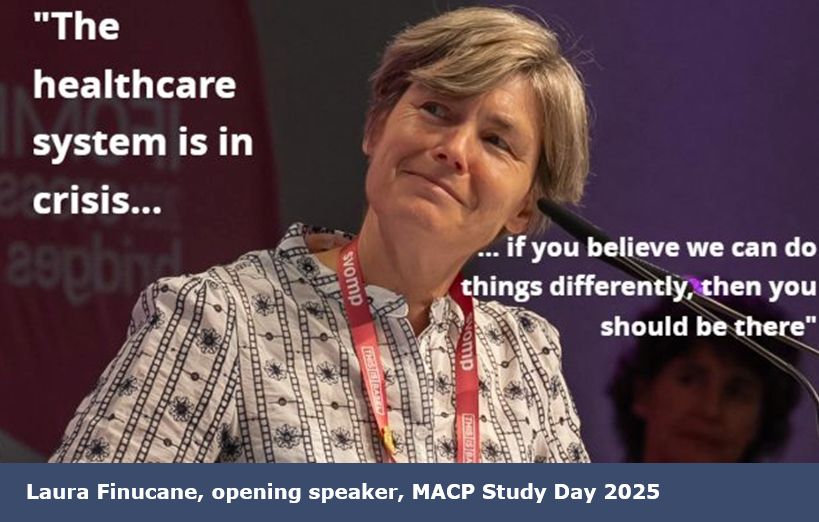
And lastly the Musculoskeletal Association of Chartered Physiotherapists (MACP) event in Birmingham ‘challenging concepts in MSK’. There was a real sense of wanting to do things differently and working to do just that despite working within the constraints of a system which are industrialised and mechanised and puts its priority on productivity and efficiency above all else. 

Photo of two white women outside with trees in the background. stood next to each other and smiling towards the camera. The woman on the left has long hair and the woman on the right has a short bobbed hair cut.

The future of healthcare

Treating populations with increasingly complex chronic and lifestyle illnesses requires more care, more wellness behaviours and more health promotion.  

The future of healthcare is one which is much more capable of understanding a person’s context beyond the specific condition they present, recognising the individual as an active participant in their own health outcomes and addressing the social determinants of health. 

Healthcare must embrace relational practice—building trust, time, and collaboration into every interaction. The future of sustainable care lies not in doing more to people, but in working with them. This cultural transformation is essential for meeting the complex needs of tomorrow’s population. 

None of this is new and while there are promising pockets of transformation, we’ve spent too long describing the problem. Now is the moment to shift from conversation to action. The scale of change may feel daunting, but by starting small, building partnerships, and embracing new ways of working, we can unlock momentum. We have the knowledge, the evidence, and the will. What we need now is the collective courage to reimagine care, not as something we deliver to people, but something we create with them. The future of healthcare depends on it. 

Also of interest

Early Pain Support: Insights From our first Community Drop-In

Early Pain Support: Insights From our first Community Drop-In

As part of Rethinking Our Health, we hosted our first community pain drop-in — a chance for people to talk things through early, get reassurance, and feel more confident about managing pain. This blog shares what we learned, and why having the right conversation at the right time really matters.

read more
Rethinking Our Health: starting with pain

Rethinking Our Health: starting with pain

We’ve been asking communities what really matters when they’re living with pain. In this update, we share what we heard, what surprised us, and how this learning is shaping a new three-part support offer for MSK pain that starts locally, builds on existing strengths, and is designed together.

read more

The post Tokyo… London… Birmingham: Three events, one message – It’s time to rethink healthcare appeared first on Here.

]]>
https://hereweare.org.uk/blog/three-events-one-message-rethink-healthcare/feed/ 0