In the space of a week, I attended 3 events that left me with mixed emotions about the future of heath care.
The story of Yma: six years of collaboration in Wales
read more
The post Sustainable healthcare delivery in practice: what drives real impact appeared first on Here.
]]>
Sustainability is often framed as targets and commitments, but in practice it is about how services are designed, delivered and run every day.
At Here, sustainable healthcare delivery is a fundamental part of good service design, not a separate initiative.
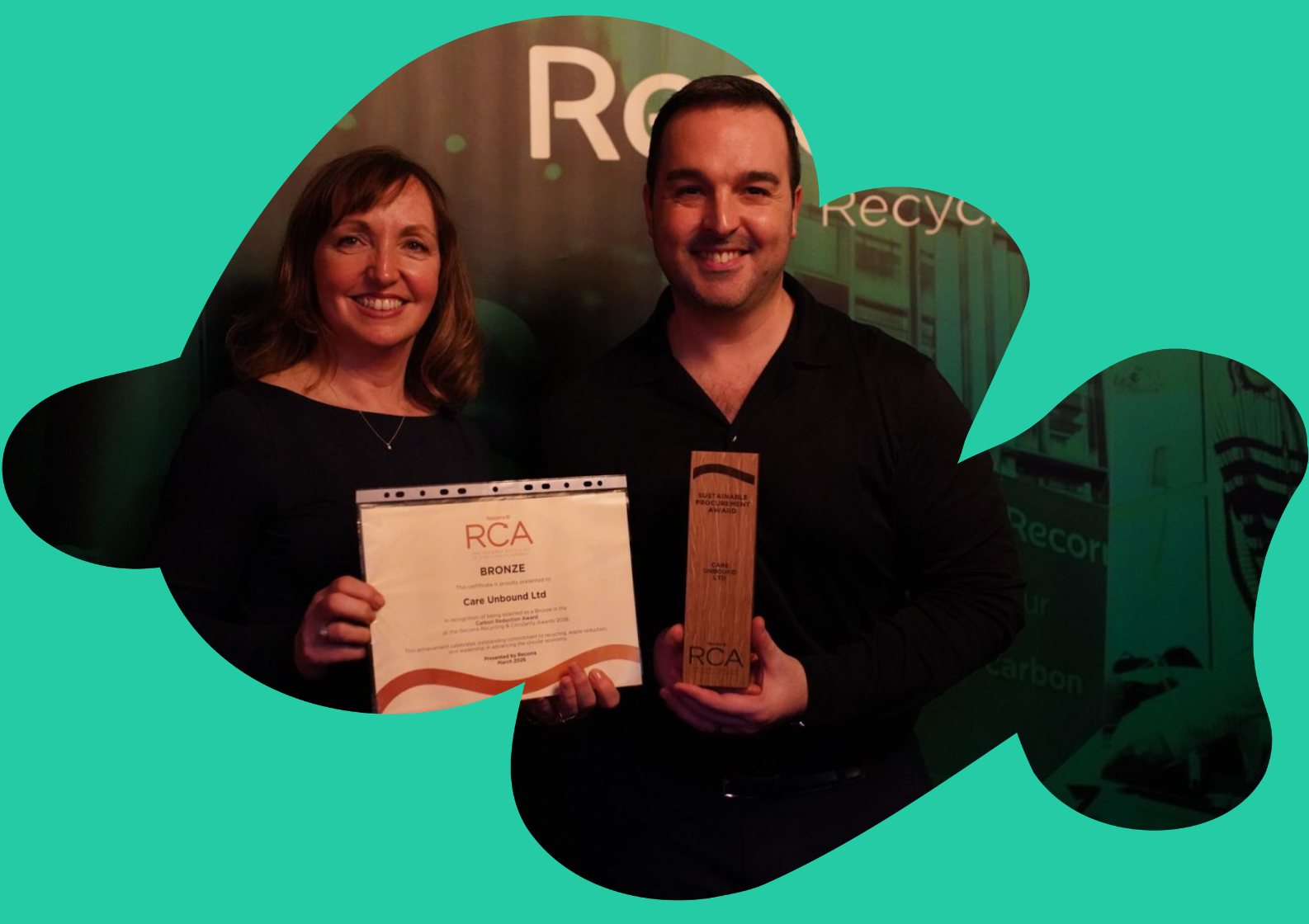
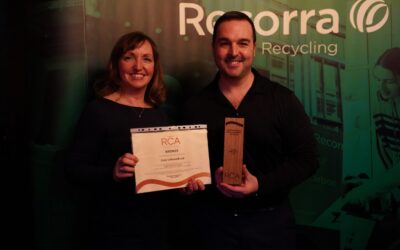
Recently, we were recognised at the Recorra Sustainability Awards with
Gold in Sustainable Procurement and Bronze in Carbon Reduction.
We’re proud of this and want to share the work that sits behind it. Here we share 5 practices that make a big difference.
Sustainability has the greatest impact when it is built into service design from the beginning.
For example, our Community Appointment Days bring care closer to where people live. This reduces the need for travel while improving access and experience. Each event saves around 179kgCO2e and supports large numbers of patients in a single day.
This is a practical example of sustainable healthcare delivery in action, where better access and lower environmental impact go hand in hand.
Procurement has been one of the most important levers for us.
We have made a deliberate choice to work with local and values-aligned suppliers. 85 percent of our spending is with Sussex-based businesses and 62 percent of our suppliers are small organisations.
We also ask suppliers to share information about their environmental practices, carbon reduction plans and ethical standards.
This helps us reduce our own impact, supports local economies and encourages more sustainable ways of working across the system.
When sustainability is built into service design, it improves value, reduces waste and supports better outcomes. That is where we see the real opportunity for change.
Lesley Jay FCA, Finance Director and Board Lead on sustainability, Here
Sustainability and value for money are closely linked.
Reducing waste, cutting unnecessary printing and designing services that reduce travel all contribute to better use of resources. For example, moving towards digital communication and reducing our office footprint has lowered both emissions and operating costs.
Similarly, community-based models like our Community Appointment Days reduce duplication and make better use of clinical time.
This is how carbon reduction in healthcare can be achieved alongside efficiency, not by adding cost.
A lot of sustainability work is not high profile. It sits in the detail of how organisations operate.
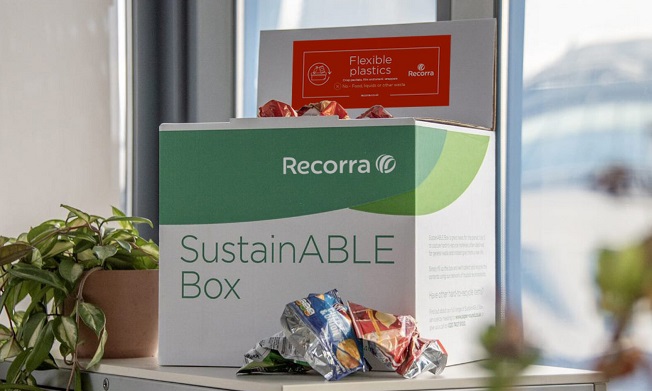
Over the past year, we have reduced paper use by 18 percent by moving towards digital communication and self-booking. We have reduced waste by 80 percent and moved away from landfill, alongside increasing recycling across a wide range of materials.
These changes reduced waste by four tonnes and saved the equivalent of 20 trees.
Individually, these actions are small. Together, they deliver measurable progress in carbon reduction in healthcare.
Sustainable healthcare delivery depends on people as much as systems.
We have supported this by creating the right conditions for change. This includes moving to more energy-efficient buildings, supporting sustainable travel through Cycle2Work and electric vehicle schemes, and seeing a shift in commuting, with 71 percent of staff walking or cycling.
We have also introduced practical initiatives such as locally sourced vegan lunches, supporting both wellbeing and more sustainable choices.
These changes help make sustainability part of everyday working life.
The main thing we are learning is that sustainability is not one initiative or one project.
It is the result of many decisions made consistently over time. Some are visible. Many are not.
When sustainability is built into how services are designed and delivered, it improves value for partners, supports better experiences for patients and contributes to healthier, more resilient communities.
If you would like to find out more about our approach to sustainable healthcare delivery, then drop us a line at collab@hereweware.org.uk
In the space of a week, I attended 3 events that left me with mixed emotions about the future of heath care.
We’ve been asking communities what really matters when they’re living with pain. In this update, we share what we heard, what surprised us, and how this learning is shaping a new three-part support offer for MSK pain that starts locally, builds on existing strengths, and is designed together.
We’ve been asking communities what really matters when they’re living with pain. In this update, we share what we heard, what surprised us, and how this learning is shaping a new three-part support offer for MSK pain that starts locally, builds on existing strengths, and is designed together.
The post Sustainable healthcare delivery in practice: what drives real impact appeared first on Here.
]]>The post The story of Yma: six years of collaboration in Wales appeared first on Here.
]]>
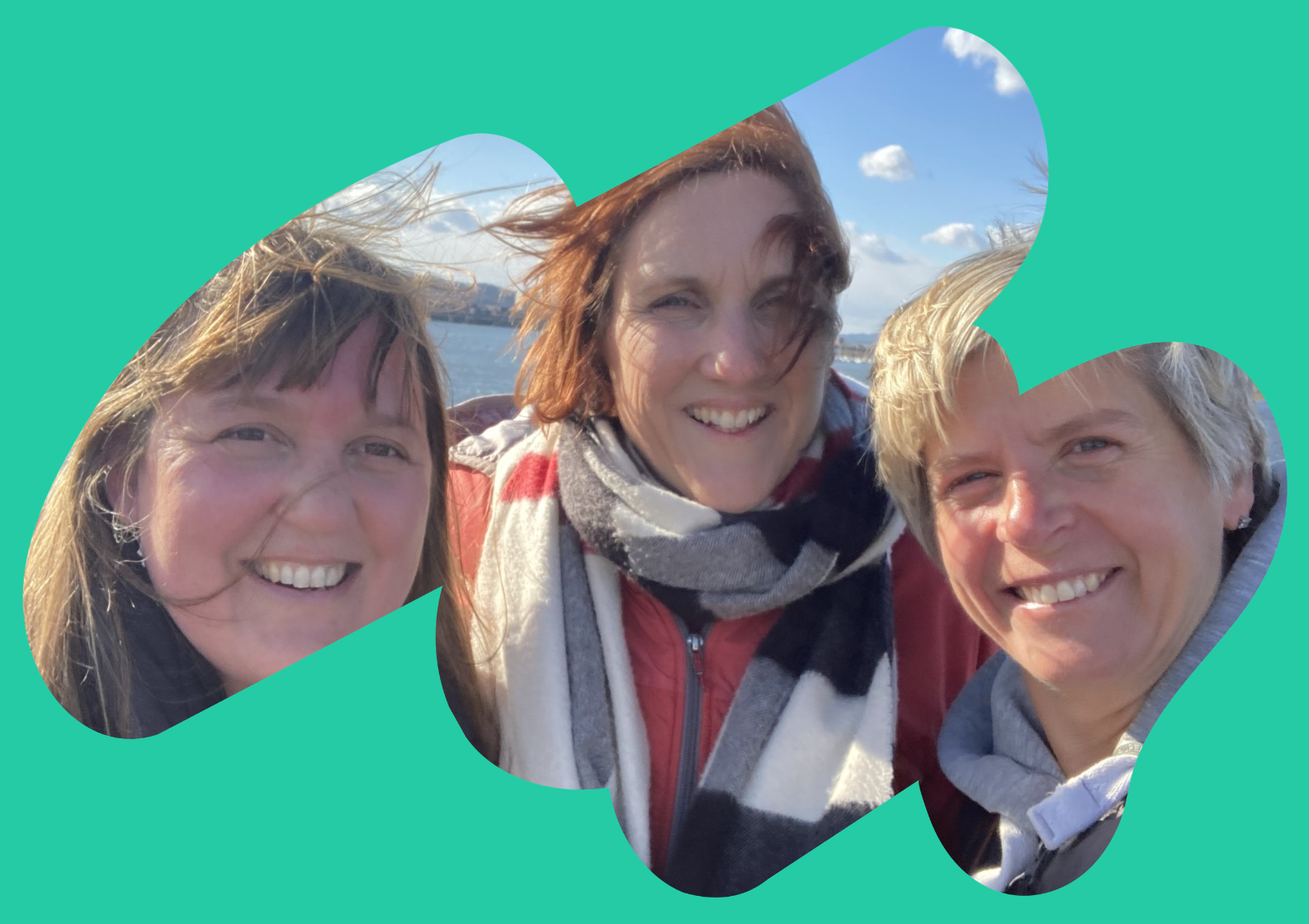
Six years ago, a conversation between clinicians planted the seed for something new in Wales. With early support from Here, that conversation grew into Yma, a social enterprise working to strengthen primary care and create the conditions for better collaboration across the health system.
Today, Yma works across Wales to connect clinicians, leaders and communities, helping turn ideas for improvement into practical change.
Its work includes evaluating services, supporting initiatives such as Health Pathways, and partnering with organisations like the Football Association of Wales to explore new approaches to improving community health.
As Yma celebrates its sixth anniversary, the people who helped shape it reflect on how it began and what it has become.
Sam Horwill, Founder and CEO, Yma
We started with a conversation.
When I think about where Yma began, it wasn’t with a strategy or a business plan. It started with a feeling that something wasn’t quite working in the way health systems connected with the people they were meant to serve.
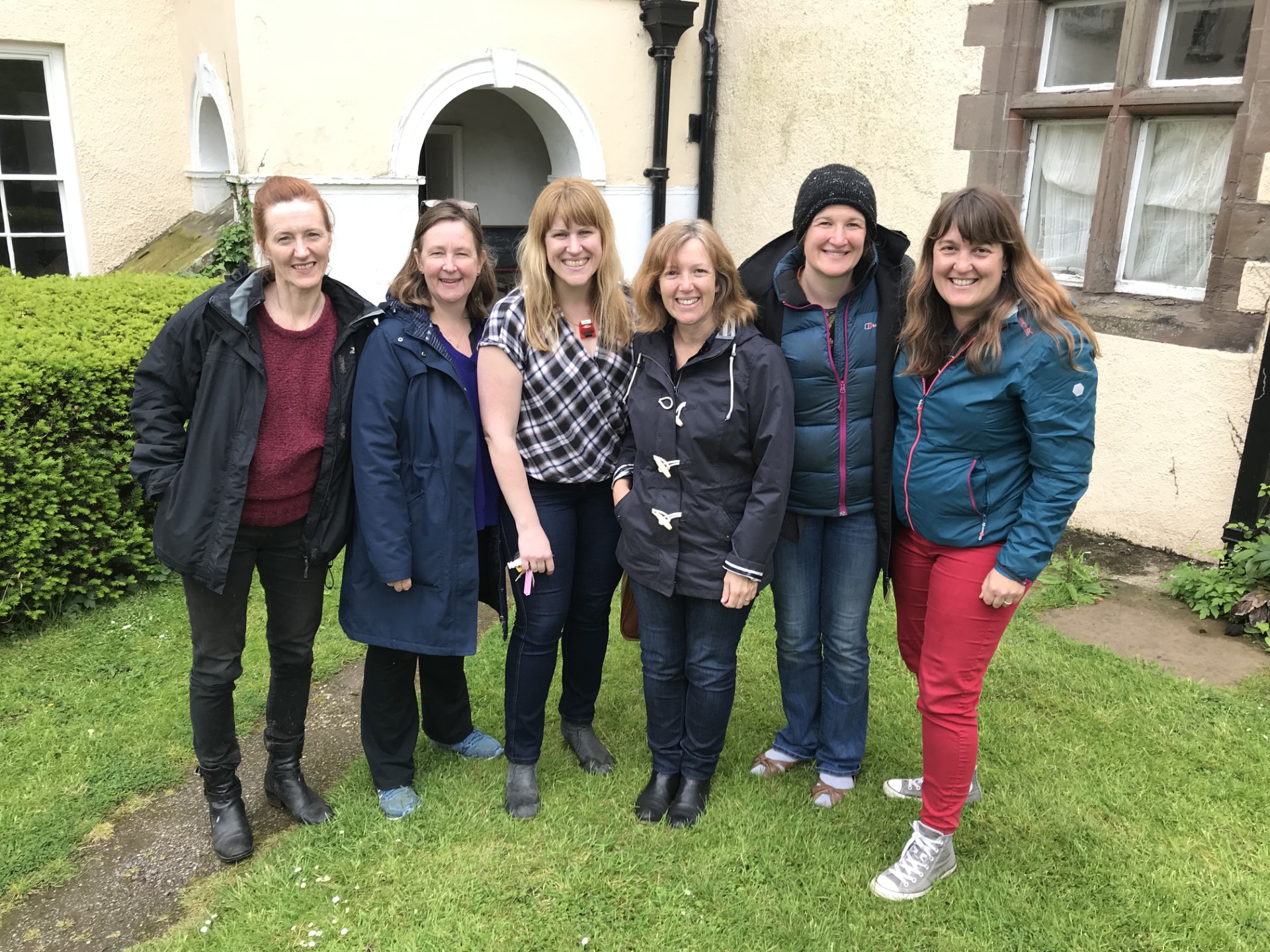
Before Yma existed, I was living and working at the intersection of three Health Board areas in Wales. I could see good work happening everywhere. Dedicated teams, innovative ideas and people trying to improve care. But so much of it stayed local. The system wasn’t always set up to help those ideas connect or spread.
So I invited a small group of GPs to spend two days together in conversation.
There was no formal agenda and no expectation of outputs. Just space to slow down and ask honest questions: what are we seeing, what do we care about and what really matters for primary care in Wales?
Those conversations became the seed of Yma.
By autumn 2019 a founding group had formed around a shared purpose: creating the conditions where primary care in Wales could thrive. We incorporated Yma on 18 March 2020.
A week later the country went into lockdown.
Looking back, that moment shaped us. We didn’t begin with a detailed roadmap. We began with values: listening, connecting people and responding to what matters.
In the early days Yma grew through relationships. People across Wales began turning to us when they needed someone who could bring people together and help navigate complexity.
During the pandemic we supported work across primary care and helped partners stay connected at a time when collaboration was more important than ever. As the All Wales Community HealthPathways programme developed, we helped bring partners together and create spaces where people could engage and shape the work.
Six years on, Yma’s impact can be felt across Wales.
We have created meaningful jobs in mid and west Wales, supported collaboration across the health system and helped bring frontline insight into conversations about change.
But what I am most proud of is something simpler. People now see Yma as a trusted partner. An organisation that shows up with curiosity, humility and a genuine commitment to helping the system work better for the communities it serves.
Julia Pirson, Programme Manager, Yma
Sometimes we don’t realise what someone brings until they arrive.
I joined Yma eight months after it was incorporated, right in the middle of the pandemic. My story started with a conversation with Sam.
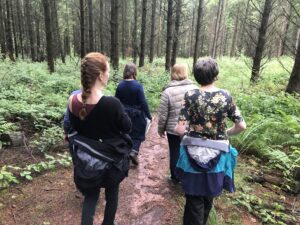
I had just moved my family to mid Wales from England and before long I had a laptop, a desk with a view of the forest and a long list of things to learn.
My background was in materials science, so working in health was completely new. But I quickly realised there were surprising connections between the systems thinking I had used before and the work we do in health improvement.
One of the things I love about Yma is the mix of people in the team.
We now have eight people working together across Wales. Our backgrounds range from lifeboat crew and PhDs to actors and cricketers. It is an eclectic mix, but it works.
What we have learnt is that everyone brings something different. Sometimes we do not realise we need what someone offers until they arrive.
We have created a working environment I am really proud of. Walking meetings are common. Part time and full time roles complement each other. There is also a genuine sense of people supporting each other every day.
It still feels like we are building something. I am excited to see where we will be in another five years.
Sarah Bartholomew, Deputy CEO, Here; former Company Director, Yma
Yma looks at the system through a different lens.
My connection with Yma goes back to working with Sam at Practice Unbound. At that time we were collaborating closely with general practice to understand the challenges it faced and to develop solutions together.
Sam recognised very early on that Welshness matters deeply to people in Wales. Being based there, understanding the context and building relationships locally was critical.
Yma was founded with the intention of creating the conditions where primary care in Wales could thrive, both now and in the future. That meant listening to what matters to people working in primary care, co creating solutions with them and standing side by side as change happens.
What makes Yma distinctive is the lens through which it approaches its work. It advocates from the grassroots. It is not tied to the status quo. It actively looks for new ways for the system to work.
Another thing I feel particularly proud of is the impact Yma has had locally. In Aberystwyth Sam has created meaningful employment for local people. Talented individuals can now work in innovative roles while staying rooted in their own community. That feels really important.
Helen Curr, CEO, Here
Yma is small but mighty.
From my perspective, Yma’s story is about the power of people who care deeply about the places they live.
Sam was part of the Here team before she moved to Wales, and she became increasingly passionate about building something meaningful there. You can see that connection to place very clearly in Yma.
Yma is a relatively small organisation, but its reach and influence are remarkable. Small but mighty is probably the best way to describe it.
One of the things I admire most is how Sam connects people. She joins the dots between leaders, organisations and communities across Wales. Those connections become the glue that allows new ideas to take shape.
Over time, our relationship with Yma has naturally evolved. In the early days the organisation leaned on Here’s experience and infrastructure while it established itself. As Sam built strong networks across Wales and the team grew in confidence, Yma increasingly found its own voice.
What we see today is the next stage in that journey. Yma has grown into a sustainable organisation in its own right, deeply connected and valued across Wales.
Yma’s story is still unfolding, and I’m excited to see what the next chapter brings as we continue working together to improve health and care for the communities we serve.
Six years on, Yma has grown from a conversation into a trusted partner working across Wales.
Its story is a reminder that meaningful change rarely begins with grand plans. More often it starts with curiosity, collaboration and the courage to do things differently.
For Here, Yma’s journey reflects something we believe strongly. Social enterprises can create the conditions for new ideas, new organisations and new ways of working to emerge.
Yma’s story shows what can happen when people are rooted in place and determined to make a difference to their communities
Sometimes that means supporting something new to take root.
Sometimes it means stepping back as that organisation grows into its own.
Yma’s story is still unfolding and we are proud to have been part of the beginning.
Next month we will share more about how Yma was created and what this partnership tells us about the role social enterprise can play in building stronger health systems and communities.
Yma’s story is one example of what can grow through partnership.
If you’re exploring new approaches to improving care, we’d love to start a conversation.
In the space of a week, I attended 3 events that left me with mixed emotions about the future of heath care.
We’ve been asking communities what really matters when they’re living with pain. In this update, we share what we heard, what surprised us, and how this learning is shaping a new three-part support offer for MSK pain that starts locally, builds on existing strengths, and is designed together.
We’ve been asking communities what really matters when they’re living with pain. In this update, we share what we heard, what surprised us, and how this learning is shaping a new three-part support offer for MSK pain that starts locally, builds on existing strengths, and is designed together.
The post The story of Yma: six years of collaboration in Wales appeared first on Here.
]]>The post New RCGP Report Highlights Hidden GP Workload appeared first on Here.
]]>
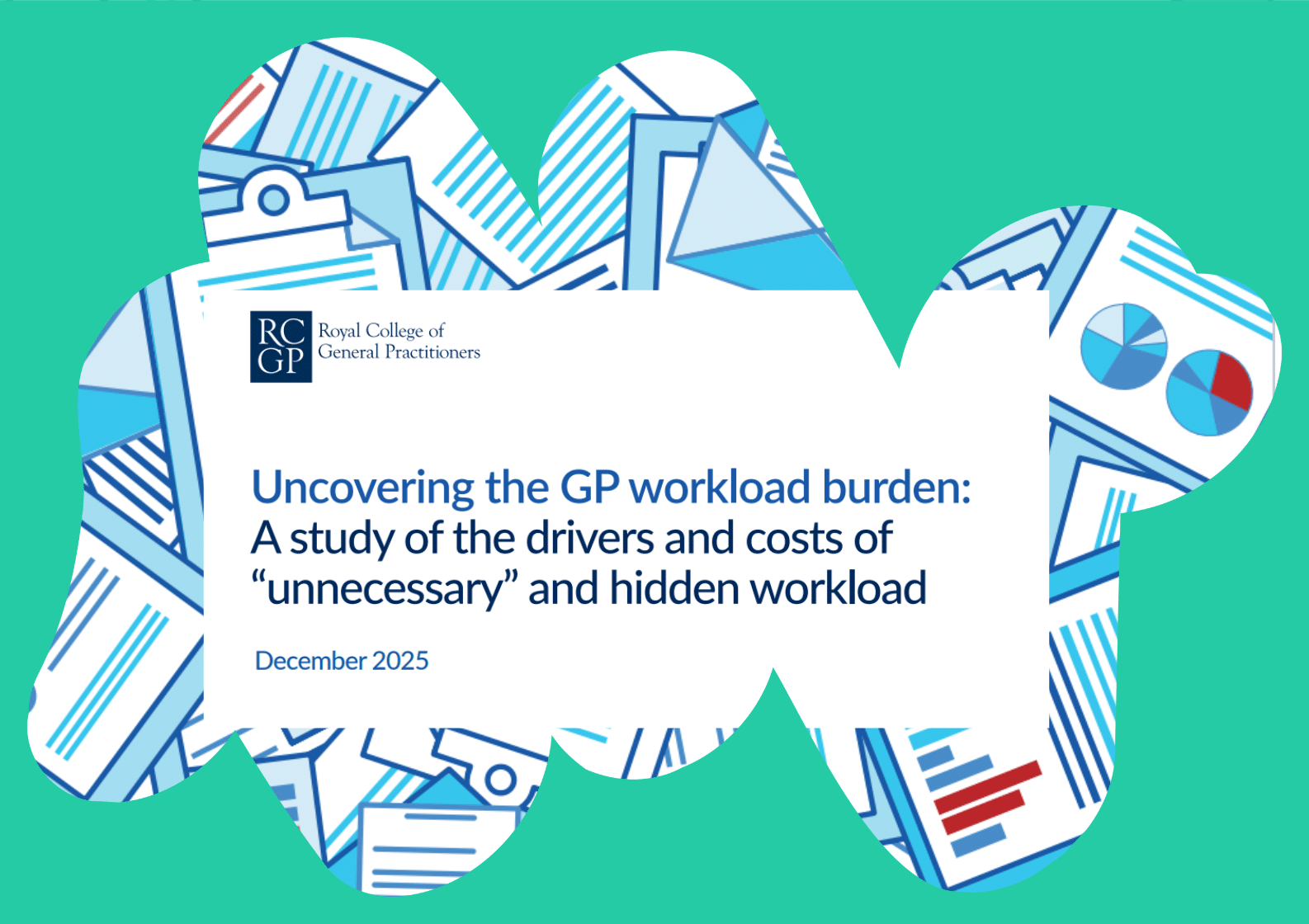
The Royal College of General Practitioners (RCGP) has published a compelling new study, “Uncovering the GP workload burden: A study of the drivers and costs of unnecessary and hidden workload” (December 2025) and we are proud that Here is featured as a key research partner in this landmark work.
Commissioned by the RCGP as part of its strategic priority to better understand and address workload pressures in general practice, this report investigates the nature, scale, and impact of what it terms “unnecessary” and hidden workload, work that absorbs valuable GP time but adds little direct clinical value.
The RCGP study deploys a thorough mixed-method design, including literature review, interviews with practitioners, and time-and-motion analysis, to produce insights into what kinds of tasks are consuming GP time and how these affect capacity and morale.
Among the most striking findings:
While the report does not claim that all administrative or non-clinical tasks are avoidable, it does illuminate the complex interplay between system design, external demands on GPs, and the realities of practice workflows.
For Here, this research affirms our conviction that better data, rigorous analysis, and practical insight are essential to designing interventions that truly reduce unnecessary burden without compromising quality of care.
Our involvement in this RCGP research has both informed and strengthened our internal product and analytics strategy and we continue to:
Working collaboratively with researchers from Apollo Innovation, Here was commissioned to contribute analytical expertise and co-design elements of the mixed-method research approach underpinning the study.
We thank the RCGP and all participating general practices for their collaboration on this important study. We also congratulate our colleague Ann Ahmad for her expert contribution to the report, which reflects Here’s commitment to evidence-led impact in healthcare analytics.
To find out more or to chat with our analytics and products team, drop us a line
Like many of us delivering healthcare in collaboration with the NHS, hospices are experiencing the dilemma of not being an NHS organisation but needing to know our way around the landscape of data as if they are.
Like many of us delivering healthcare in collaboration with the NHS, hospices are experiencing the dilemma of not being an NHS organisation but needing to know our way around the landscape of data as if they are.

Like many of us delivering healthcare in collaboration with the NHS, hospices are experiencing the dilemma of not being an NHS organisation but needing to know our way around the landscape of data as if they are.
The post New RCGP Report Highlights Hidden GP Workload appeared first on Here.
]]>The post Rethinking Pain: Insights from The Kings Fund and Here appeared first on Here.
]]>
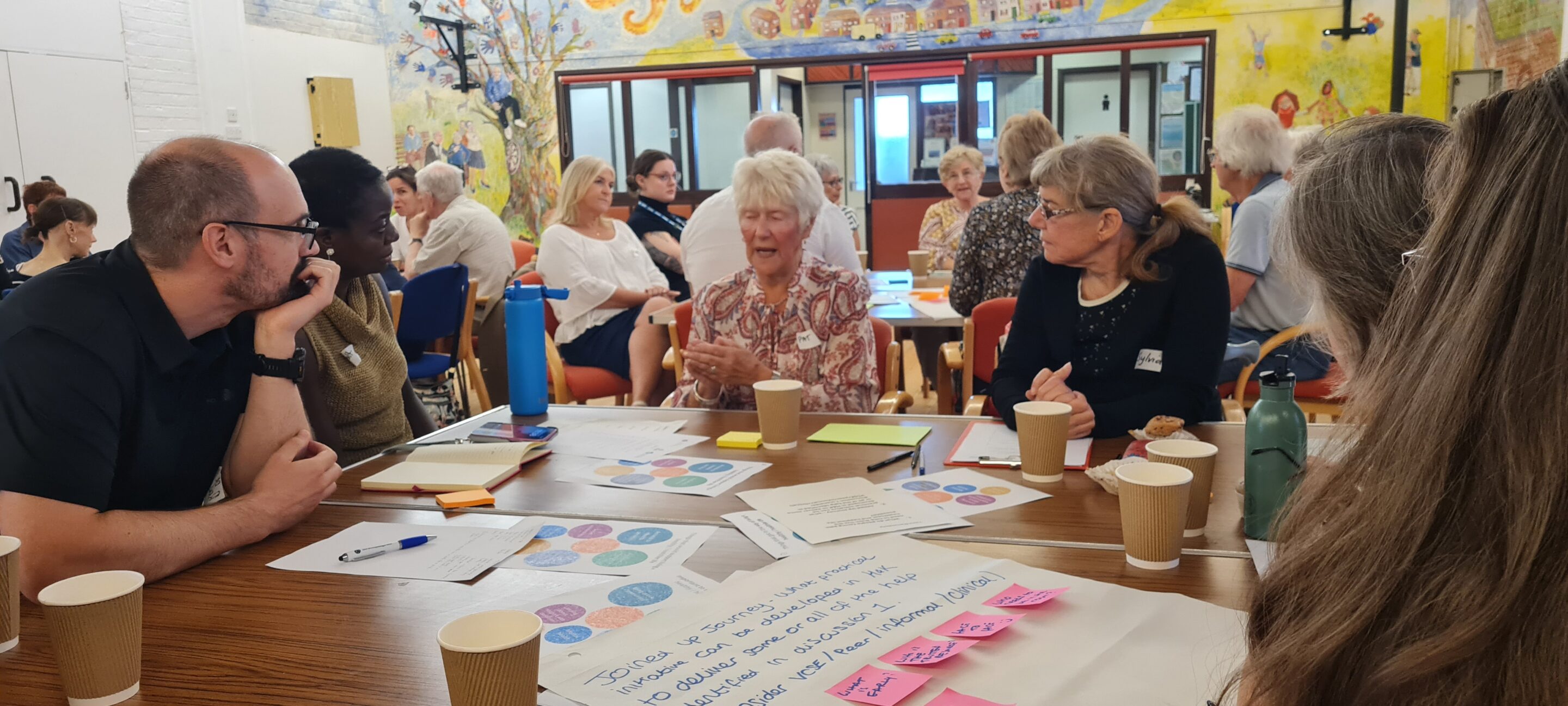
The blog argues for a fundamental shift: from doing things to people in pain, to doing things with them. That means co-designing services alongside people with lived experience, understanding what really matters to them, and supporting them to take part in shaping their care. This approach resonates deeply with our work at Here, where we are rethinking how pain services can be delivered across Sussex and beyond. We know that pain doesn’t exist in isolation — it affects movement, sleep, relationships, mental health, and overall wellbeing. Addressing it effectively means working across boundaries and building partnerships that help people stay active, connected, and in control of their health.
Our Rethinking Our Health programme is already putting these principles into practice:
This collaboration with The King’s Fund reflects our shared belief that meaningful change happens when people, professionals, and communities design health services together. You can read the full blog, “Rethinking Pain: Can a ‘Do With’ Approach Prevent Complex Multiple Conditions?”, on The King’s Fund website.
We’ve been asking communities what really matters when they’re living with pain. In this update, we share what we heard, what surprised us, and how this learning is shaping a new three-part support offer for MSK pain that starts locally, builds on existing strengths, and is designed together.
As part of Rethinking Our Health, we hosted our first community pain drop-in — a chance for people to talk things through early, get reassurance, and feel more confident about managing pain. This blog shares what we learned, and why having the right conversation at the right time really matters.
We’ve been asking communities what really matters when they’re living with pain. In this update, we share what we heard, what surprised us, and how this learning is shaping a new three-part support offer for MSK pain that starts locally, builds on existing strengths, and is designed together.
The post Rethinking Pain: Insights from The Kings Fund and Here appeared first on Here.
]]>The post Here shortlisted for HSJ Award 2025 for CADs appeared first on Here.
]]>
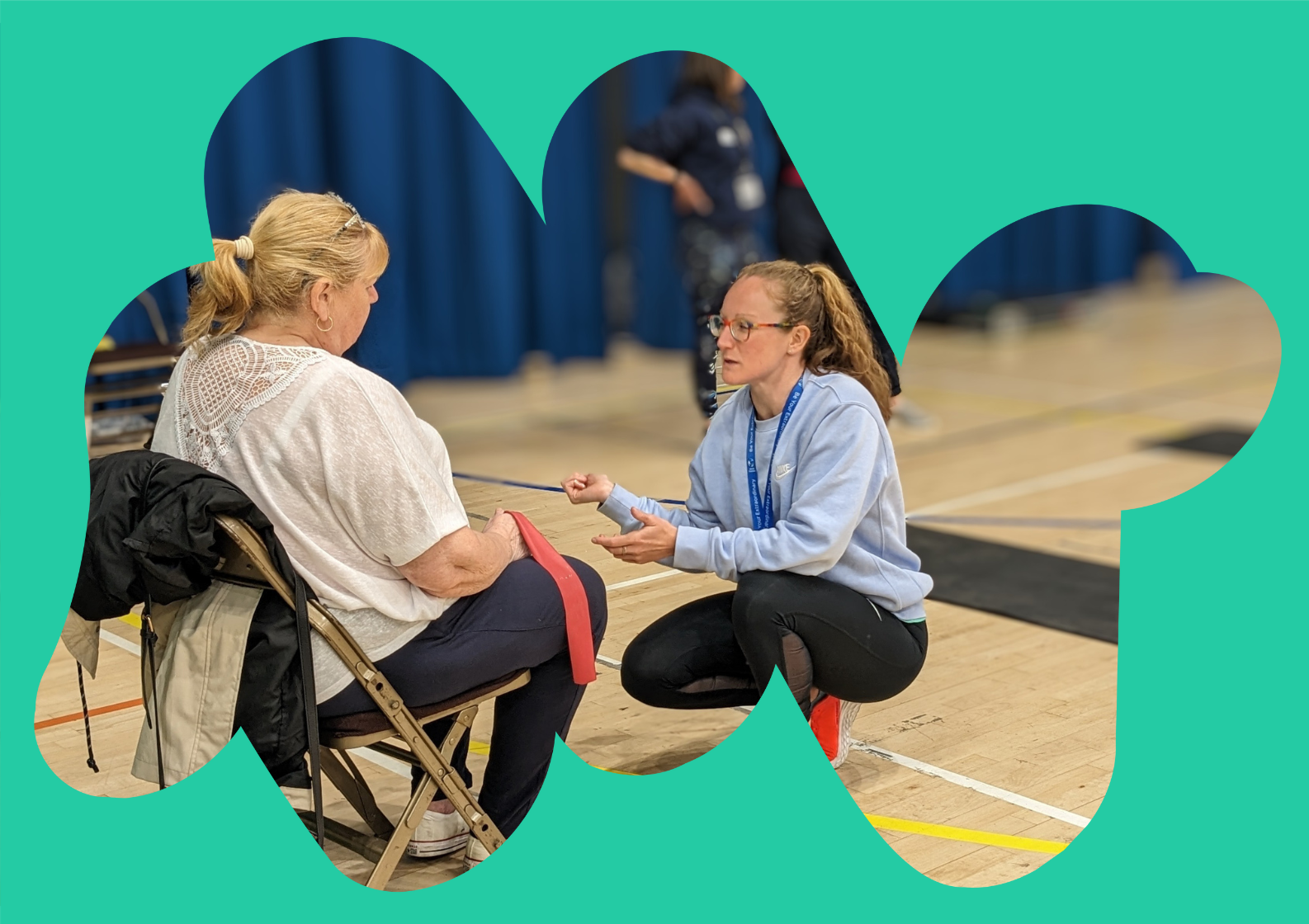
We’re delighted to share that Community Appointments Days (CADs), developed by Here as part of Sussex MSK Partnership has been shortlisted for a 2025 HSJ Award in the Primary and Community Care Innovation of the Year category.
This shortlisting is a celebration of the collaborative effort that brought CADs to life – including our brilliant partners at Sussex Community NHS Foundation Trust, local VCSE organisations, and the dedicated clinicians, care navigators and volunteers who are reimagining care with us.
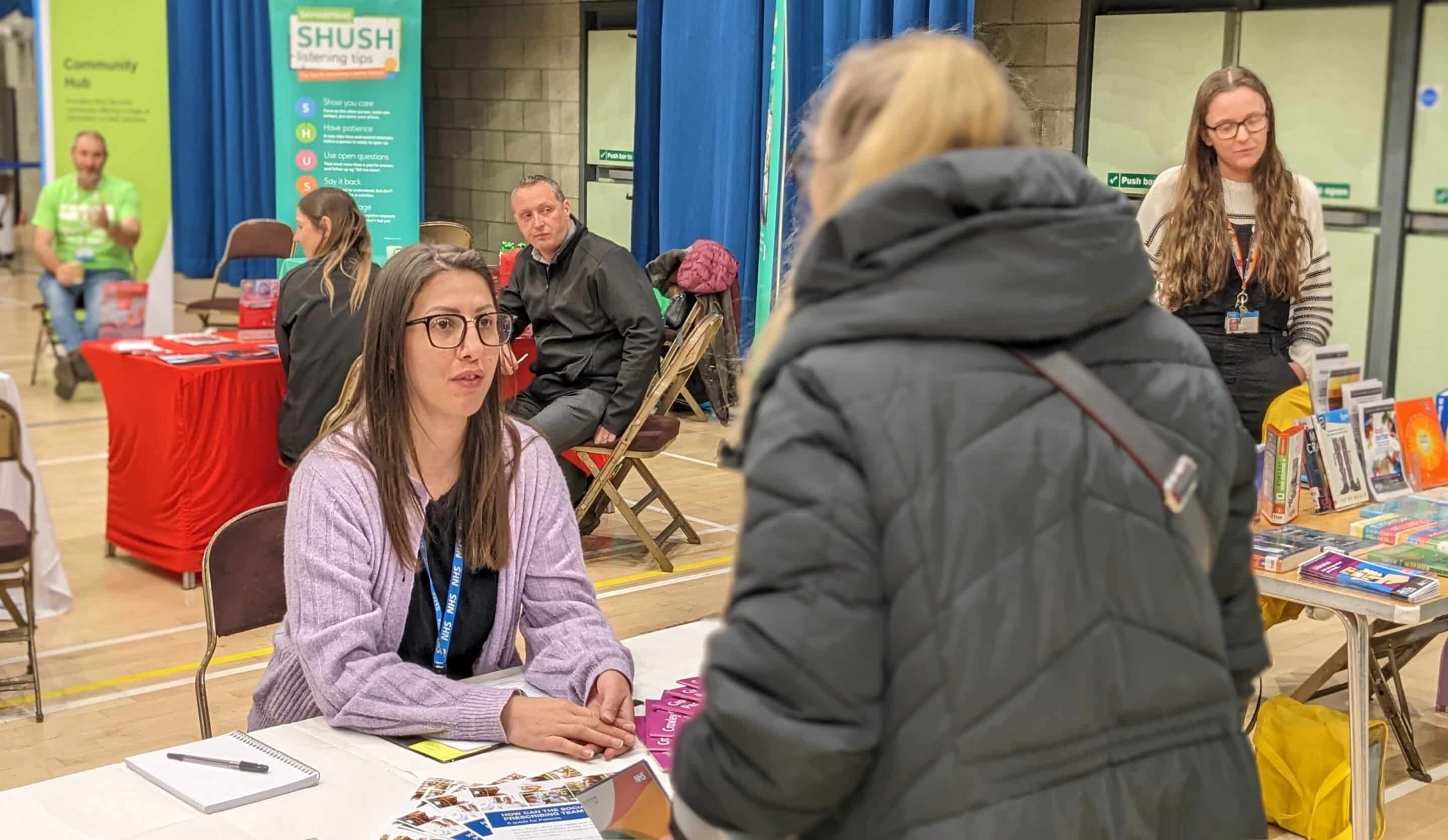
Our entry showcases the innovative CAD model of care co-designed with patients, clinicians and voluntary sector partners. CADs are transforming how people experience MSK (musculoskeletal) support by bringing together whole teams of professionals in local community spaces, and delivering same-day, person-centred care shaped around individual priorities.
“What could have taken a few months was made possible in 1.5 hours.”
— Patient feedback from a CAD
Born from a vision to take care out of hospitals and into the heart of communities, CADs enable people to get the support they need in one visit – from clinical advice and self-management plans to wellbeing coaching and social prescribing. With over half of attendees discharged to self-care on the day, and outstanding feedback from both patients and staff, CADs are delivering real impact – and a powerful example of what becomes possible when we start with trust, partnership, and the question “What matters to you?”
The most coveted accolade in UK healthcare, the HSJ Awards is the largest annual benchmarking and recognition programme for the health sector. This year’s awards attracted more than 1,250 entries from across the health sector. With only 245 projects and individuals making it through to the final shortlist, the competition has been incredibly tough, demonstrating the impressive scale of talent, commitment, and impact across the NHS and wider healthcare landscape.

Our shortlisted entry for Community Appointment Days, was selected following a rigorous judging process and has been recognised as a standout example of excellence in healthcare delivery.

We are honoured to be shortlisted for the HSJ 2025, Primary and Community Care Innovation of the Year award. This recognition is a testament to what’s possible when we put people at the centre of care and work across traditional boundaries. Community Appointment Days are built on trust, collaboration and listening – and they’re making a real difference to people’s lives. I’m incredibly proud of the teams and partners who have made this happen and delighted to see their work acknowledged on a national stage. To be recognised among so many outstanding initiatives is already a win in itself.
Helen Curr
CEO at
Here
HSJ Editor Alastair McLellan commented: “On behalf of all my colleagues, it gives me great pleasure to congratulate Here on being shortlisted as a finalist in the category of Primary and Community Care Innovation of the Year. All of the applications represent the ‘very best of the NHS’ and often leave our esteemed panel of judges with an impossible choice! Year on year the number of entrants continue to rise which I find so encouraging and is testament to the effect that HSJ Awards can have on improved staff culture and morale.”
We’re proud to stand alongside others who are pushing boundaries and demonstrating that integrated, person-centred care is not just possible, but essential for the future of healthcare.
Thank you to everyone involved and congratulations to all the other inspiring projects and teams shortlisted this year!
In the space of a week, I attended 3 events that left me with mixed emotions about the future of heath care.
In the space of a week, I attended 3 events that left me with mixed emotions about the future of heath care.
We’ve been asking communities what really matters when they’re living with pain. In this update, we share what we heard, what surprised us, and how this learning is shaping a new three-part support offer for MSK pain that starts locally, builds on existing strengths, and is designed together.
The post Here shortlisted for HSJ Award 2025 for CADs appeared first on Here.
]]>The post Rethinking Our Health: co-designing better support for long-term health conditions in Sussex appeared first on Here.
]]>
Rethinking Our Health is a new collaboration between Here and The King’s Fund, bringing together communities and organisations across Sussex to explore new ways of supporting people living with multiple long-term conditions.
Together with partners in the voluntary, community and social enterprise sector, primary care, and local government, we’ll be focusing on two neighbourhood test sites:
Long-term conditions (LTCs) are among the most pressing issues in health and social care in the UK. These chronic illnesses require sustained, ongoing management, and an increasing number of people are living with more than one condition.
This rise in multiple long-term conditions is having a serious and growing impact on individuals, families, communities, the economy, and our health and care services.
However, formal healthcare only accounts for around 20 per cent of a person’s health outcomes. The remaining 80 per cent are influenced by social factors, health behaviours and the physical environment. This means we need to look beyond traditional ways of working and rethink how people, communities, and professionals across health and other sectors come together to design solutions.
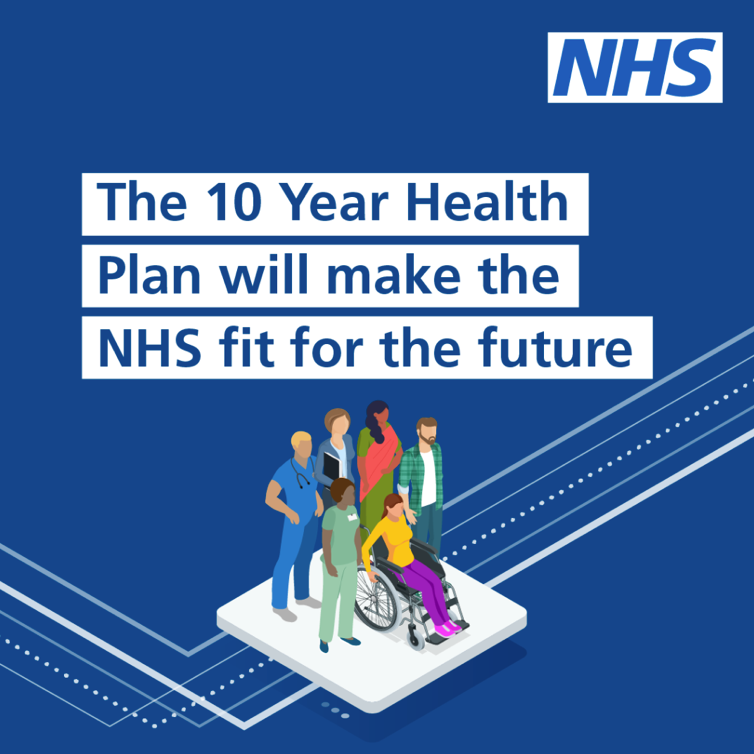
This project directly supports the aims of the new NHS 10-Year Plan, which prioritises prevention, neighbourhood-level care, personalised support, and tackling the root causes of health inequality.
Rethinking Our Health aligns closely with the plan’s ambition to strengthen the role of communities and the voluntary sector in health improvement, and to give people more control over managing their own conditions. It also helps test practical approaches to joined-up, place-based care, delivered through integrated neighbourhood teams.
Wick test site partners
Voluntary Action Arun & Chichester, Arun District Council, West Sussex County Council, Arun ICT
West Brighton & Hove test site partners
The Hangleton & Knoll Project, Portslade Health Centre
People with more than one long-term condition often face a tangled web of barriers to managing their health, not only clinical symptoms, but also housing pressures, transport issues, isolation, work stress, or caring responsibilities.
Rethinking Our Health is about working with communities to design and test new ways of offering support that will:
Initially, we will focus on supporting people living with osteoarthritis, diabetes and cardiovascular disease, which are often experienced together. We expect pain and mental health to be important factors in this work, although persistent pain will not be included in the project.
We know that people face a wide range of barriers when it comes to managing their health. These include:
The project will unfold over four phases:
Everything we do will be underpinned by a shared set of values and principles:
If you would like to know more or get involved, please contact jo.crease@nhs.net.
We will be sharing our learning and progress as the project develops on our blog.
We’ve been asking communities what really matters when they’re living with pain. In this update, we share what we heard, what surprised us, and how this learning is shaping a new three-part support offer for MSK pain that starts locally, builds on existing strengths, and is designed together.
As part of Rethinking Our Health, we hosted our first community pain drop-in — a chance for people to talk things through early, get reassurance, and feel more confident about managing pain. This blog shares what we learned, and why having the right conversation at the right time really matters.
We’ve been asking communities what really matters when they’re living with pain. In this update, we share what we heard, what surprised us, and how this learning is shaping a new three-part support offer for MSK pain that starts locally, builds on existing strengths, and is designed together.
The post Rethinking Our Health: co-designing better support for long-term health conditions in Sussex appeared first on Here.
]]>The post What works for Menopause in the workplace? Sharing what we’ve learned appeared first on Here.
]]>

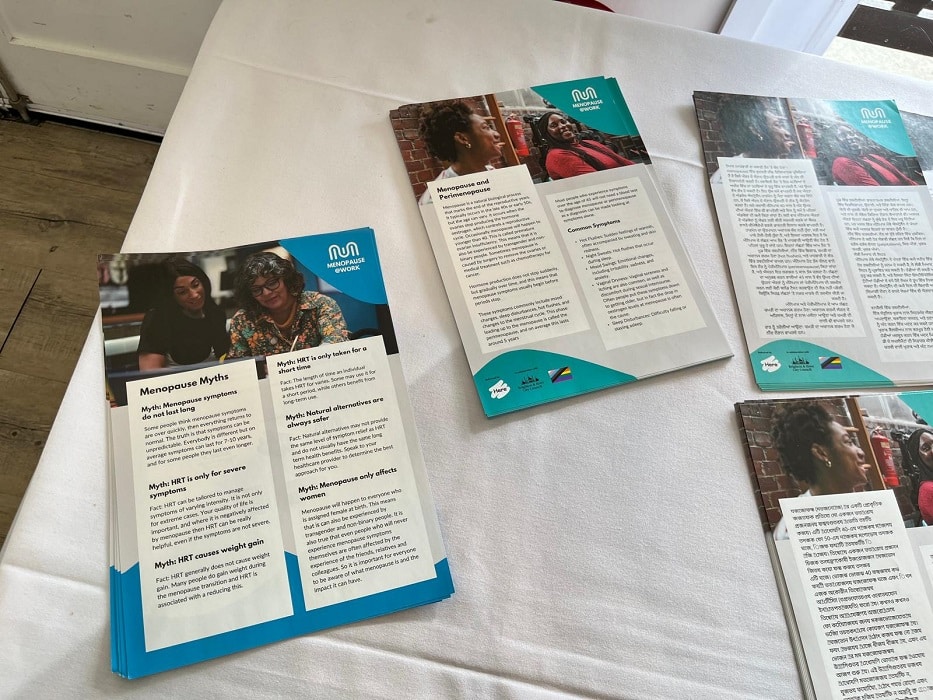
Today we’re publishing the evaluation of Menopause@Work, a programme we co-led with Brighton & Hove City Council to support menopause awareness and action in small and medium-sized businesses (SMEs).
Funded by the VCSE Health and Wellbeing Fund as part of the Women’s Health Strategy for England, the project’s aim was to give SMEs the knowledge, confidence, and tools to better support staff through menopause.
Through a mix of live events, online resources, and practical learning modules, we engaged nearly 500 individuals, most from SME organisations that we set out to support.
Our intention from the start was to bring expertise out of the clinic and into the everyday situations people live and work in, blending it with local knowledge and community insight to create something truly practical and grounded.
With the final evaluation now complete, we’re sharing what we’ve learned.

Online learning, convenient and helpful, alone wasn’t enough. What people valued most were the live events: spaces to talk, connect, and feel heard.
The programme helped individuals grow in confidence and knowledge, and in many cases led to practical changes at work. But lasting, systemic change remains slow, especially where leadership support or resource is lacking.
If workplaces want to truly support staff through menopause, they need to move beyond individual action and bring leadership along with them.
One of the programme’s core ambitions was to bring clinically informed expertise into the everyday spaces where people live and work. The evaluation shows this mattered. Participants responded most positively to live, discussion-based events that created safe, relatable spaces. By combining expert knowledge with local understanding and real-world context, the programme helped translate information into action. Small, practical changes, like adjusting uniforms or offering flexible breaks, came directly from these conversations.
We hope this evaluation offers valuable insight for others working to create more supportive, inclusive workplaces.
Download the full Menopause@Work evaluation here.
If you’re working to make your organisation more menopause-friendly, or curious about how we co-design our projects and services, we’d love to talk: drop us a line at Collab@hereweare.co.uk
We’ve been asking communities what really matters when they’re living with pain. In this update, we share what we heard, what surprised us, and how this learning is shaping a new three-part support offer for MSK pain that starts locally, builds on existing strengths, and is designed together.
As part of Rethinking Our Health, we hosted our first community pain drop-in — a chance for people to talk things through early, get reassurance, and feel more confident about managing pain. This blog shares what we learned, and why having the right conversation at the right time really matters.
We’ve been asking communities what really matters when they’re living with pain. In this update, we share what we heard, what surprised us, and how this learning is shaping a new three-part support offer for MSK pain that starts locally, builds on existing strengths, and is designed together.
The post What works for Menopause in the workplace? Sharing what we’ve learned appeared first on Here.
]]>The post Welcoming Kirsty Coates: Our New Partnership Director for Sussex MSK Health appeared first on Here.
]]>
Here and Sussex Community NHS Foundation Trust are delighted to officially welcome Kirsty Coates as Partnership Director for Sussex MSK Health. Kirsty also joins Here’s Enabling Team, bringing a strong track record in service transformation, operational leadership and cross-sector partnership working.
Kirsty is already well-known to many Here.
As our former Head of Operations, she played a key role in shaping innovative services and led the organisation’s COVID-19 vaccination programme. Since then, she has continued to build experience in senior roles across the NHS and voluntary sector, most recently as Operations Director at Social Tech Trust, where she focused on using technology to drive social impact.
In her new role, Kirsty will work in partnership with colleagues across Here, Sussex Community NHS Foundation Trust and the wider system to lead the development of Sussex MSK Health — an integrated service for people with musculoskeletal conditions across Brighton & Hove and West Sussex. Her focus will be on supporting collaboration, improving outcomes, and ensuring people can access the right care at the right time.
Kirsty’s return to Here is a real asset for the organisation. She brings energy, vision, and deep experience in building partnerships that improve care. It’s been fantastic to see the impact she’s already making in her first weeks, and I’m excited to see what comes next for the MSK service under her leadership.
Helen Curr
CEO of Here
Sussex MSK Health is an innovative partnership bringing together specialist expertise to deliver personalised care support for musculoskeletal health. We are really pleased to have Kirsty join as the new Partnership Director and know her leadership will be instrumental in shaping the future of this new service and in driving continuous improvements in outcomes for our patients.
Kate Pilcher
Chief Operating Officer, Sussex Community NHS Foundation Trust
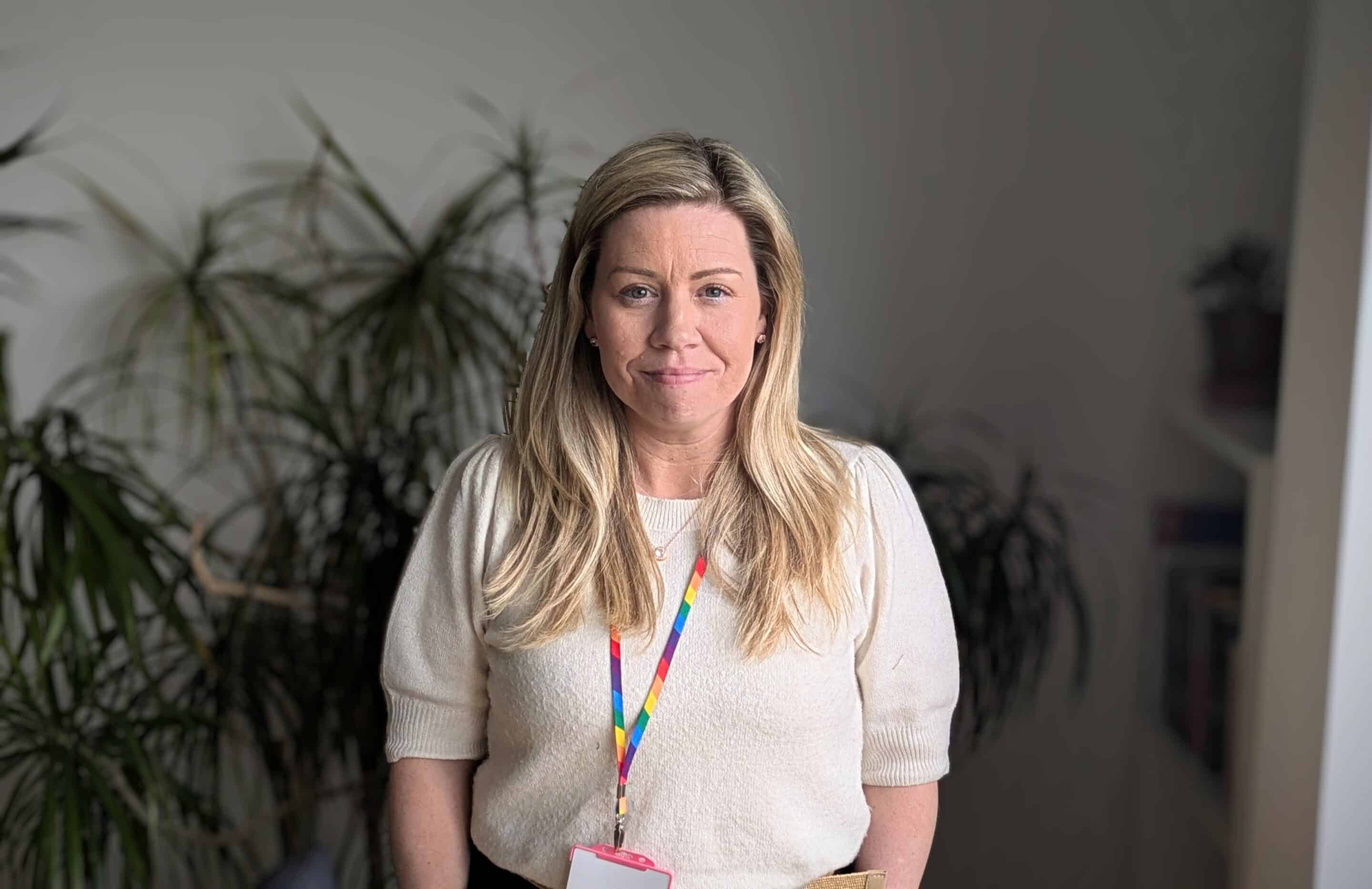
Kirsty Coates added: “It’s a real pleasure to return to Here at such an exciting and important time. I’m passionate about working in partnership to develop person-centred, sustainable services, and I’m looking forward to contributing to the next chapter of Sussex MSK Health alongside such a dedicated and talented team.”
We’ve been asking communities what really matters when they’re living with pain. In this update, we share what we heard, what surprised us, and how this learning is shaping a new three-part support offer for MSK pain that starts locally, builds on existing strengths, and is designed together.
As part of Rethinking Our Health, we hosted our first community pain drop-in — a chance for people to talk things through early, get reassurance, and feel more confident about managing pain. This blog shares what we learned, and why having the right conversation at the right time really matters.
We’ve been asking communities what really matters when they’re living with pain. In this update, we share what we heard, what surprised us, and how this learning is shaping a new three-part support offer for MSK pain that starts locally, builds on existing strengths, and is designed together.
The post Welcoming Kirsty Coates: Our New Partnership Director for Sussex MSK Health appeared first on Here.
]]>The post Dementia Action Week 2025: With the Alzheimer’s Society appeared first on Here.
]]>
This Dementia Action Week, the spotlight is on diagnosis, helping people recognise the signs of dementia and take that all-important first step. At Here, we know how important it is that people feel supported not just after diagnosis, but from the moment they’re referred.
That’s why we’ve deepened our partnership with Alzheimer’s Society as part of our work to improve the Memory Assessment Service (MAS) in Brighton & Hove.
Together, we’ve worked to expand our support offer and connect more people to vital support services. From the point of referral, Alzheimer’s Society provides support, practical advice and signposting for people with memory concerns or a diagnosis of dementia and their families.
This partnership complements the work of our MAS team, who continue to offer regular check-ins and What Matters to You conversations. With increasing demand for memory assessments, this joined-up approach has helped us deliver care that is timely, person-centred and grounded in dignity.
We’re proud of what we’ve achieved together so far and committed to building on it, so that no one has to face the waiting period alone and everyone accessing our service feels informed, supported and seen.
We are delighted to be working in partnership with Here. Together we can help many more people to get the right support, at the right time.
Carrie Holmes
South East England Regional Manger at Alzheimer’s Society
We’ve been asking communities what really matters when they’re living with pain. In this update, we share what we heard, what surprised us, and how this learning is shaping a new three-part support offer for MSK pain that starts locally, builds on existing strengths, and is designed together.
As part of Rethinking Our Health, we hosted our first community pain drop-in — a chance for people to talk things through early, get reassurance, and feel more confident about managing pain. This blog shares what we learned, and why having the right conversation at the right time really matters.
We’ve been asking communities what really matters when they’re living with pain. In this update, we share what we heard, what surprised us, and how this learning is shaping a new three-part support offer for MSK pain that starts locally, builds on existing strengths, and is designed together.
The post Dementia Action Week 2025: With the Alzheimer’s Society appeared first on Here.
]]>The post Celebrating Natalie Blunt: A pioneer of personalised MSK care in Sussex appeared first on Here.
]]>
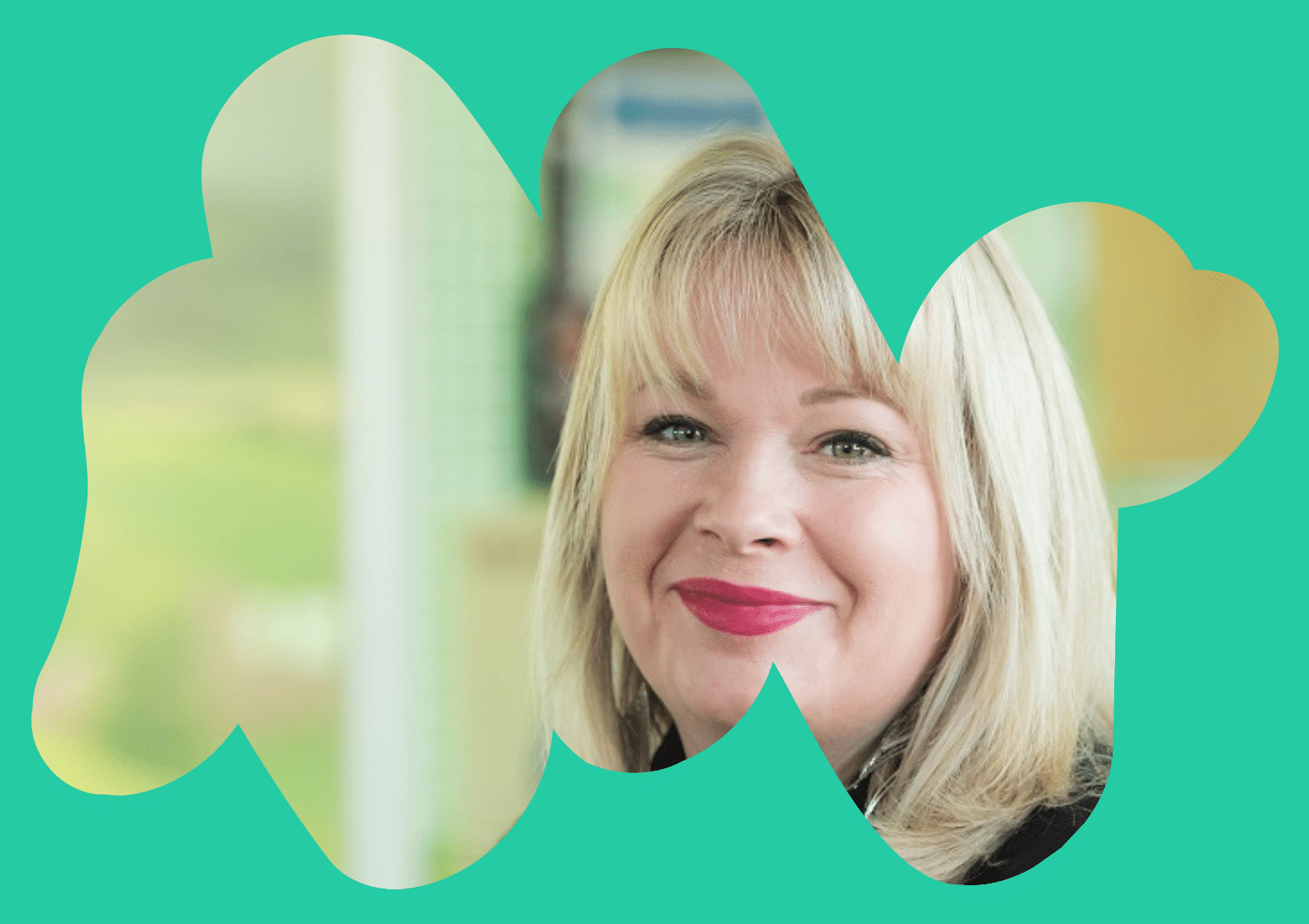
After more than a decade of visionary leadership, Natalie Blunt is moving on from her role as Managing Director of Sussex MSK Partnership Central and as a member of the Here board. As she steps away, we want to take a moment to reflect on her immense contribution, celebrate the legacy she leaves, and simply say: thank you, Natalie.
Natalie has been with Here for 15 years, dedicating her career to transforming musculoskeletal (MSK) care both locally and nationally. She has spent the last five years as Director of MSK services, and her expertise, clarity of purpose, and relentless focus on people have made a lasting mark on everything we do.
She has been at the heart of Sussex MSK Partnership Central since its formation in 2014, a bold and innovative joint venture between Here and Sussex Community NHS Foundation Trust. Under her leadership, what began as an ambitious idea has grown into a national exemplar of joined-up, person-centred MSK care for a population of over 1 million people in Sussex.
Throughout her time with us, Natalie has championed MSK health as a vital part of overall wellbeing, not just something to treat, but something to prioritise. She’s driven a whole-person approach, seeing beyond symptoms to the lives behind them. As she often reminded us, “an elbow never walked into a treatment room on its own.” It’s that clarity, always putting people first, that has shaped the service we are so proud of today.
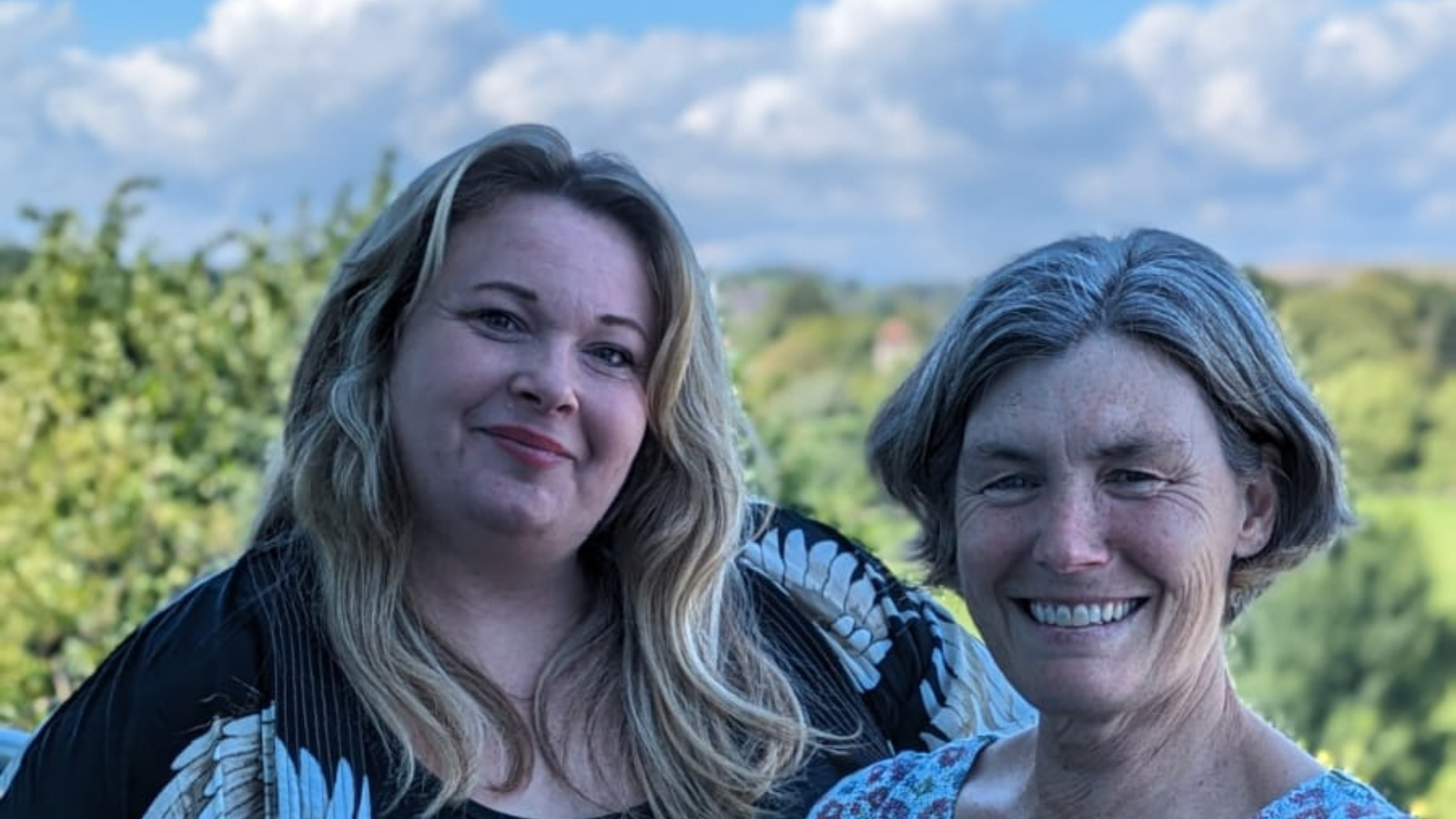
Natalie with Laura Finucane
There have been many standout moments along Natalie’s MSK journey with Here.
In 2015, Natalie helped usher in a national first, recruiting a Patient Director. This groundbreaking move placed people with lived experience at the centre of service design and paved the way for our innovative Health Builders Programme.
2019 was a year of celebration. The partnership won an HSJ Partnership Award and was rated Outstanding by the CQC, a reflection of the excellence she helped cultivate every day as Deputy MD.
During the most challenging days of the COVID-19 pandemic, Natalie led the team to proactively redeploy MSK expertise to support the urgent care system, a testament to her ability to see the bigger picture and act swiftly in the face of crisis.
In 2022, she co-authored The CASE for Change, a landmark publication with Laura Finucane that laid out a compelling vision for excellence in MSK care. Its influence continues to resonate across clinical and commissioning communities alike.
And in 2023, Sussex MSK Partnership Central was recognised again; this time with a HealthTech Award, highlighting how innovation and compassion can go hand in hand.
One of Natalie’s most celebrated achievements came with the creation of our Community Appointment Days, a new, person-focused approach that made national headlines and is now a model now emulated across the sector.
In 2024/25, Natalie played a key role in developing and launching Sussex MSK Health: Brighton, Hove and West Sussex, expanding our innovative approach to MSK care to serve a population of over one million people.
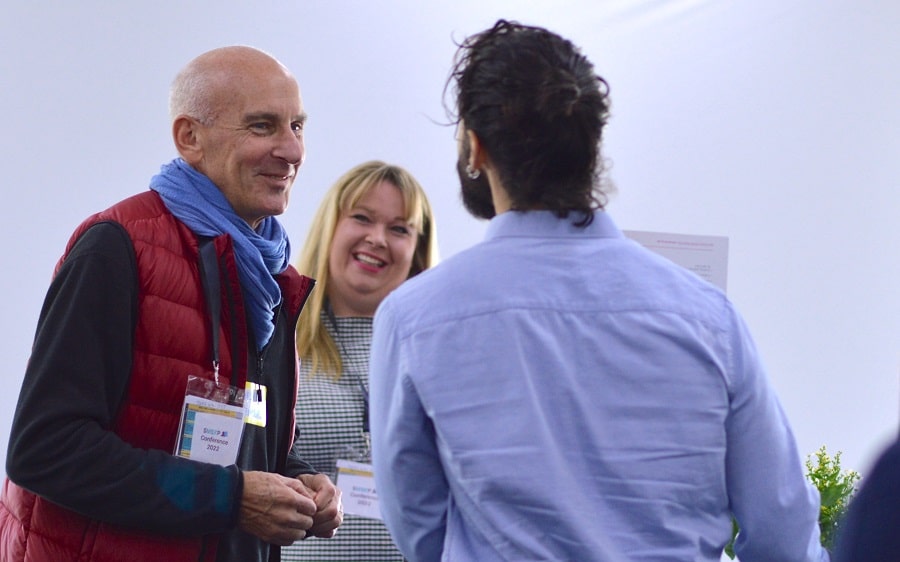
Natalie at an MSK conference
Natalie’s leadership has been defined by clarity of vision, fierce advocacy for personalised care, and a deep belief in the power of partnership. She has shown us what it means to lead with purpose and to act courageously.
As a board member at Here, Natalie also brought energy, wisdom and challenge, helping ensure our work stayed connected to our vision and values. Her presence will be deeply missed, but her influence will continue to shape our work for years to come.
“Natalie’s leadership has shaped a remarkable chapter in MSK care — one defined by innovation, compassion, and a deep commitment to people. She’s challenged us to think differently, to design services that truly reflect the lives of the people we serve, and to never lose sight of our purpose. Her impact on Here, and on MSK care across Sussex, will be felt for years to come.”
— Helen Curr, Chief Executive, Here
We’ve been asking communities what really matters when they’re living with pain. In this update, we share what we heard, what surprised us, and how this learning is shaping a new three-part support offer for MSK pain that starts locally, builds on existing strengths, and is designed together.
As part of Rethinking Our Health, we hosted our first community pain drop-in — a chance for people to talk things through early, get reassurance, and feel more confident about managing pain. This blog shares what we learned, and why having the right conversation at the right time really matters.
We’ve been asking communities what really matters when they’re living with pain. In this update, we share what we heard, what surprised us, and how this learning is shaping a new three-part support offer for MSK pain that starts locally, builds on existing strengths, and is designed together.
The post Celebrating Natalie Blunt: A pioneer of personalised MSK care in Sussex appeared first on Here.
]]>