

New RCGP Report Highlights Hidden GP Workload
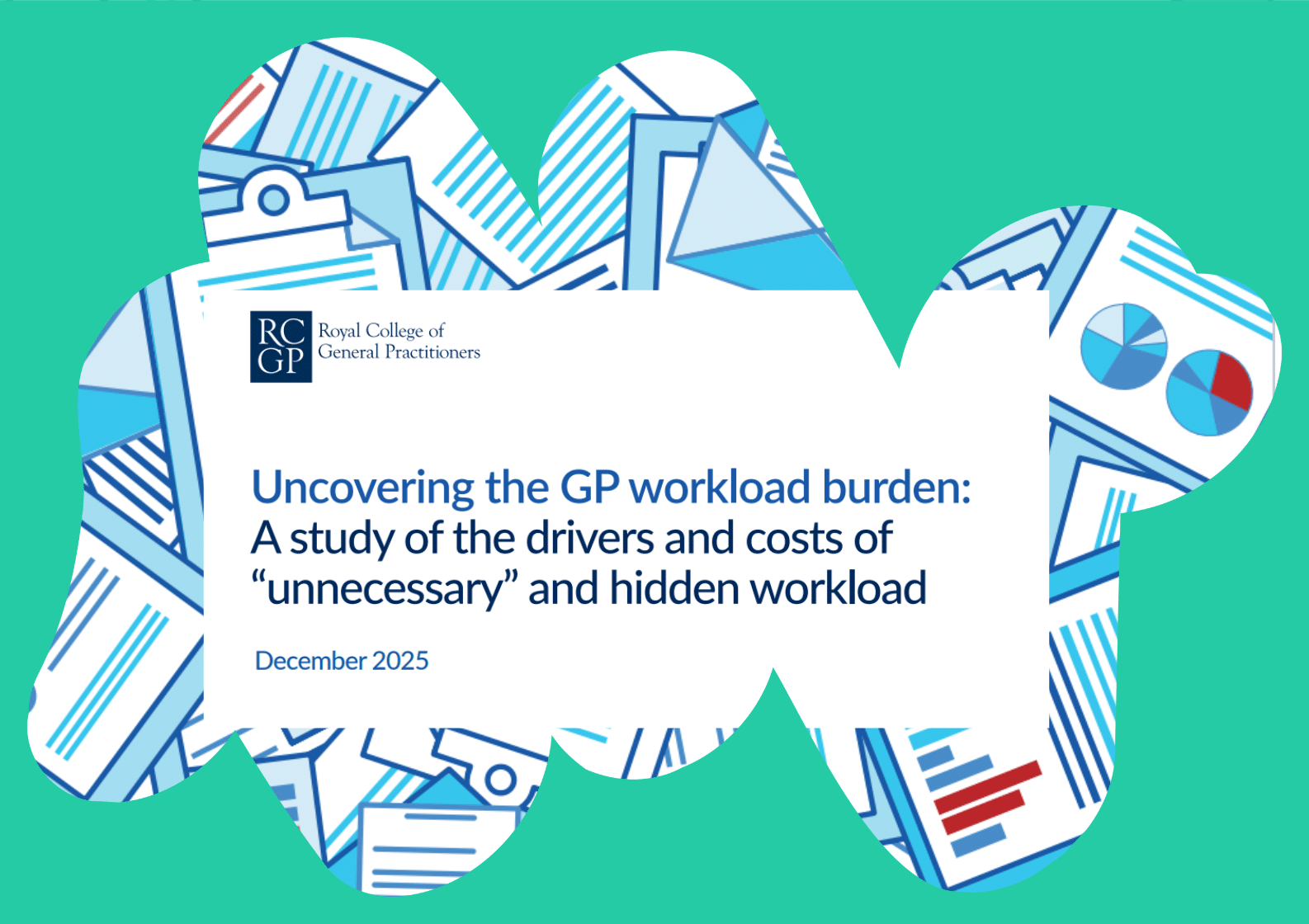
The Royal College of General Practitioners (RCGP) has published a compelling new study, “Uncovering the GP workload burden: A study of the drivers and costs of unnecessary and hidden workload” (December 2025) and we are proud that Here is featured as a key research partner in this landmark work.
Commissioned by the RCGP as part of its strategic priority to better understand and address workload pressures in general practice, this report investigates the nature, scale, and impact of what it terms “unnecessary” and hidden workload, work that absorbs valuable GP time but adds little direct clinical value.
Key Findings of the RCGP Report
The RCGP study deploys a thorough mixed-method design, including literature review, interviews with practitioners, and time-and-motion analysis, to produce insights into what kinds of tasks are consuming GP time and how these affect capacity and morale.
Among the most striking findings:
- Hidden workload is significant. Tasks characterised as unnecessary or inefficient, such as form-filling, navigating fragmented referral systems, and external administrative requests, were pervasive and often time intensive.
- Costs are material. Using time-and-motion data, the study estimates the average daily cost per GP attributable to unnecessary activities, at £410.53, a measure that underscores the operational and economic impact of the issue.
- Impact on Wellbeing and Retention. Beyond time and cost, the report highlights that unnecessary workload contributes to emotional fatigue, burnout risk, and reduced job satisfaction; factors that are central to contemporary concerns about GP recruitment and retention.
Why this matters, and what Here is doing about it.
While the report does not claim that all administrative or non-clinical tasks are avoidable, it does illuminate the complex interplay between system design, external demands on GPs, and the realities of practice workflows.
For Here, this research affirms our conviction that better data, rigorous analysis, and practical insight are essential to designing interventions that truly reduce unnecessary burden without compromising quality of care.
Our involvement in this RCGP research has both informed and strengthened our internal product and analytics strategy and we continue to:
- Partner with healthcare organisations and frontline practitioners to refine workload measurement frameworks.
- Embed research findings into the development of solutions that support workload-intelligent operations.
- Advocate for evidence-based policy that recognises both the value and the cost of hidden clinical work.
Here’s Role in the Research
Working collaboratively with researchers from Apollo Innovation, Here was commissioned to contribute analytical expertise and co-design elements of the mixed-method research approach underpinning the study.
Acknowledgements
We thank the RCGP and all participating general practices for their collaboration on this important study. We also congratulate our colleague Ann Ahmad for her expert contribution to the report, which reflects Here’s commitment to evidence-led impact in healthcare analytics.
To find out more or to chat with our analytics and products team, drop us a line
Also of interest

Data and Analytics: why we work with hospices
Like many of us delivering healthcare in collaboration with the NHS, hospices are experiencing the dilemma of not being an NHS organisation but needing to know our way around the landscape of data as if they are.

Data rich, information poor: Why analytics matters to hospices
Like many of us delivering healthcare in collaboration with the NHS, hospices are experiencing the dilemma of not being an NHS organisation but needing to know our way around the landscape of data as if they are.

Congratulations Aaron Salter: Hospice UK’s Digital Champion Award winner 2024
As a social enterprise dedicated to transforming healthcare through data analytics, we are thrilled to share the inspiring story of Aaron Salter, winner of the Digital Champion Award at the Hospice UK Conference 2024.